
Many people compare hand tools to power tools, saying they’re slower, but if you want control, skill, and timeless joinery you’ll find hand tools unbeatable; you learn to feel the wood, not just push buttons. You’ll need patience, practice, and respect for sharp steel – sharp blades can and will cut you if you’re careless – so wear sensible protection and keep edges honed. Want better fits and quieter evenings in the shop? You’ll get that, and the satisfaction is real. Precision and safety matter most.
Key Takeaways:
- Traditional hand tools let you do more with less. A solid wooden workbench and a handful of go-to tools – think a jack plane, a block plane, panel saws, a dovetail and tenon saw, plus a set of bench chisels – will get you farther than a garage full of gadgets. You can rough things out, lay out joints, and finish by hand, and the results are often cleaner than power-tool-only work. Want a fast path to competence? Start with those basics and use them a lot.
- Skill and sharpening trump price every time. Learn to sharpen blades and tune saws – it’s a pain at first, but once you’ve got it down your tools cut like butter and you’ll save a ton.
A sharp tool is a safe tool.
So spend time on technique and maintenance, not hunting the fanciest brand name. - Start small, build your kit as you go. You don’t need every specialty plane or chisel on day one – a prioritized 20-tool list or even fewer will let you tackle most projects, and you’ll add items as your projects demand them. Want to avoid buyer’s remorse? Buy what you’ll use this month, not what looks cool, and stash the rest until you actually miss it.
Essential Hand Tools for Traditional Woodworking
The 20 Must-Have Hand Tools for Beginners
About 20 core tools will let you tackle roughly 90% of basic furniture and small-casework projects. Start with a jack plane, block plane, a pair of panel saws (rip and crosscut), 1-3 backsaws, a set of bench chisels (5-7), a mortise chisel, a 6-inch combination square, try square, miter box, coping saw, sharpening stones, mallet, braces or a hand drill, clamps, marking gauge, spokeshave and a smoothing plane. You’ll use some of these every single day. Want to save money? Buy a good used plane and rehaban old chisels.
Choosing Quality Over Quantity: A Guide to Tool Selection
One high-quality plane or chisel often outperforms and outlasts several cheap ones, so spend where it matters: cutting edges and measuring tools. Opt for hardened steel irons, comfortable handles, accurate squares and reliable vises; expect to pay $50-$250 for solid bench planes and $30-$120 for good chisels. Cheap tools wear faster, rust sooner, and can be dangerous if brittle or poorly ground. Why buy a dozen throwaway items when a few well-chosen tools speed up your work and improve your joints?
Prioritize sharpening gear first – a sharp tool is safer and more efficient, so buy stones, a leather strop and a honing guide before chasing exotic planes. Hunt for vintage Stanley, Record or quality Japanese tools at flea markets; you can often rehab a $20 plane into a $150 performer with a new iron and tuning. When testing tools, check blade flatness, mouth gap on planes, and handle fit – you should feel like you want to pick it up. Spend most of your initial budget on cutting and measuring tools; the rest you can add as your skills grow.
Constructing Your Workspace: The Heart of Woodworking
Designing a Functional Workbench
Your workbench is where the work happens. Pick a bench with at least a 3″ solid top, heavy legs and one reliable vise; many woodworkers build benches 4-8 ft long and 33-36″ high to suit planing and sawing. Fit a face or leg vise, 3/4-inch dog holes for holdfasts, and a planing stop. You want mass for stability, a rigid apron to resist twist, and a height that fits your stance so you can plane without tiring fast.
Optimizing Your Shop Layout for Efficiency
Layout either speeds you up or slows you down. Place your bench centrally with at least 3-6 ft of clear space for long stock, create logical zones for marking, cutting, assembly, and sharpening, and keep the tools you use most within a 2-3 ft reach. Good task lighting above the bench matters, and dust control is not optional – it’s a health risk, so plan for extraction or cross-ventilation near sanding and sharpening areas.
Small tweaks cut hours from a project. Mount a pegboard 12-18 inches above the benchtop so frequently used tools hang at eye level, put outlets every 4-6 ft at about 36 inches high, and size lumber racks for the longest boards you work with (6-8 ft common). Keep a 36-inch clear aisle for safe movement with long stock, locate the sharpening station close but slightly separated to avoid swarf contamination, and stash a fire extinguisher and first-aid kit by the door. And use mobile bases for big items so you can reconfigure the flow when a project demands it.
The Art of Precision: Marking and Measuring Tools
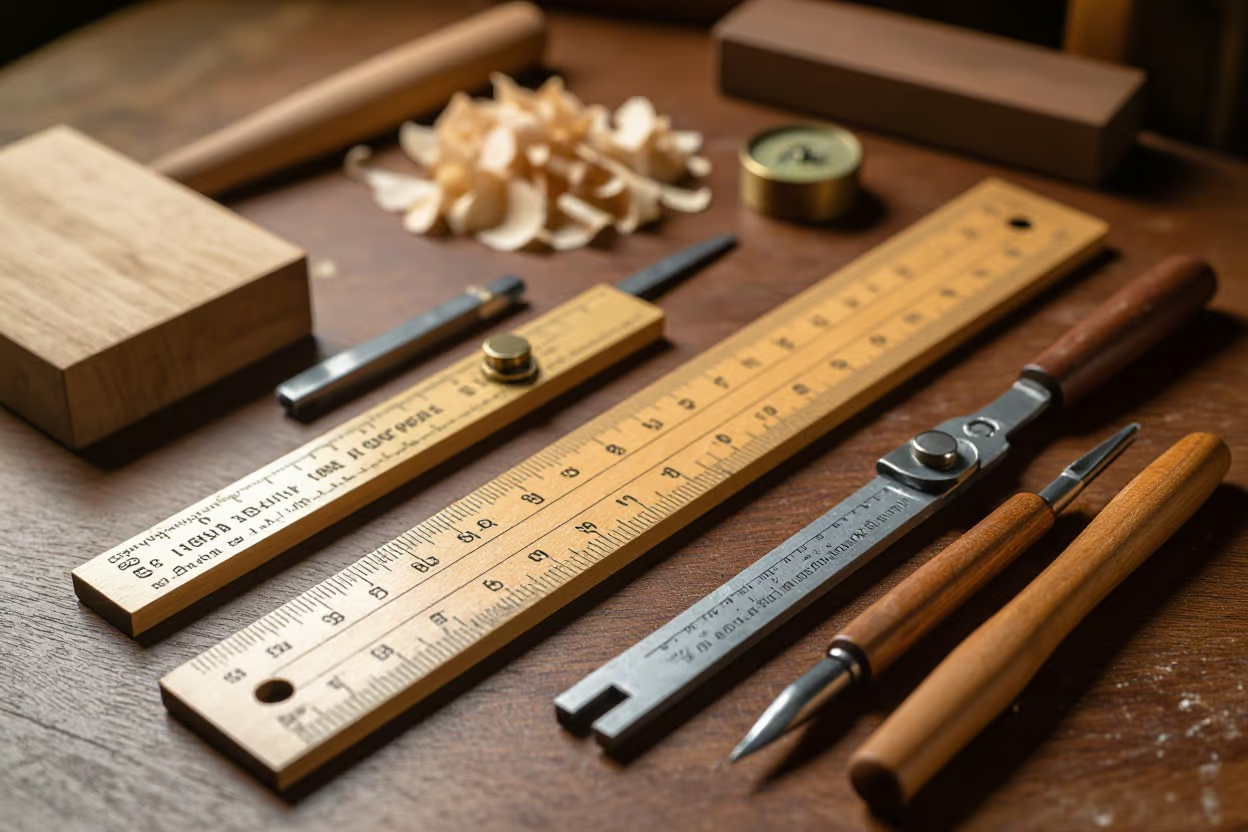
Recently there’s been a small renaissance in hand-tool layout – but you’re also seeing affordable digital calipers and laser distance meters on many benches; the trick is pairing modern accuracy (digital calipers to ±0.01 mm, lasers to 50 m) with old-school feel so your joints fit tight and your waste stays low.
Essential Measurement Tools for Accurate Cuts
You should keep a 6-inch combination square, a 12-inch stainless steel rule, a properly adjusted marking gauge (set by feel), a sharp marking knife, dividers, and a mortise gauge for layout. Add a set of calipers for fine work and a tape or laser measure for rough stock; together they let you hit repeatable tolerances – fractions of an inch or hundredths of a millimeter – so cuts land where you expect.
Techniques for Precision Layout and Marking
Start by scribing with a marking knife rather than pencil to prevent tearout and give a true edge for your saw. Use your combination square to transfer measurements from face to edge, and a story stick when you have multiple identical parts to avoid cumulative error. And clamp the work before you scribe – shifting stock is the fastest way to ruin a joint or waste a board.
When laying out a mortise and tenon you’ll often set the mortise gauge once – say to 3/8″ or the exact tenon width – then use that setting to score both faces; this eliminates the need to re-measure for every hole. Use dividers to step off dovetail spacing and check center-to-center distances, and put a tiny center punch mark where a drill starter must locate so the bit won’t wander. For long edges, run a short steel rule from one end and transfer the line with a square at several stations rather than stretching the rule – you’ll avoid parallax and flex. And when you’re cutting to a shoulder line, pare to the knife line with a chisel before sawing for a hair-tight fit; that small step often transforms a sloppy joint into one that assembly tolerates without fuss. Strong habits – like clamping before marking, keeping knives and cutters sharp, and using a story stick for repeats – save wood and time.
Flawless Surfaces: Mastering Hand Planes
Types of Hand Planes and Their Uses
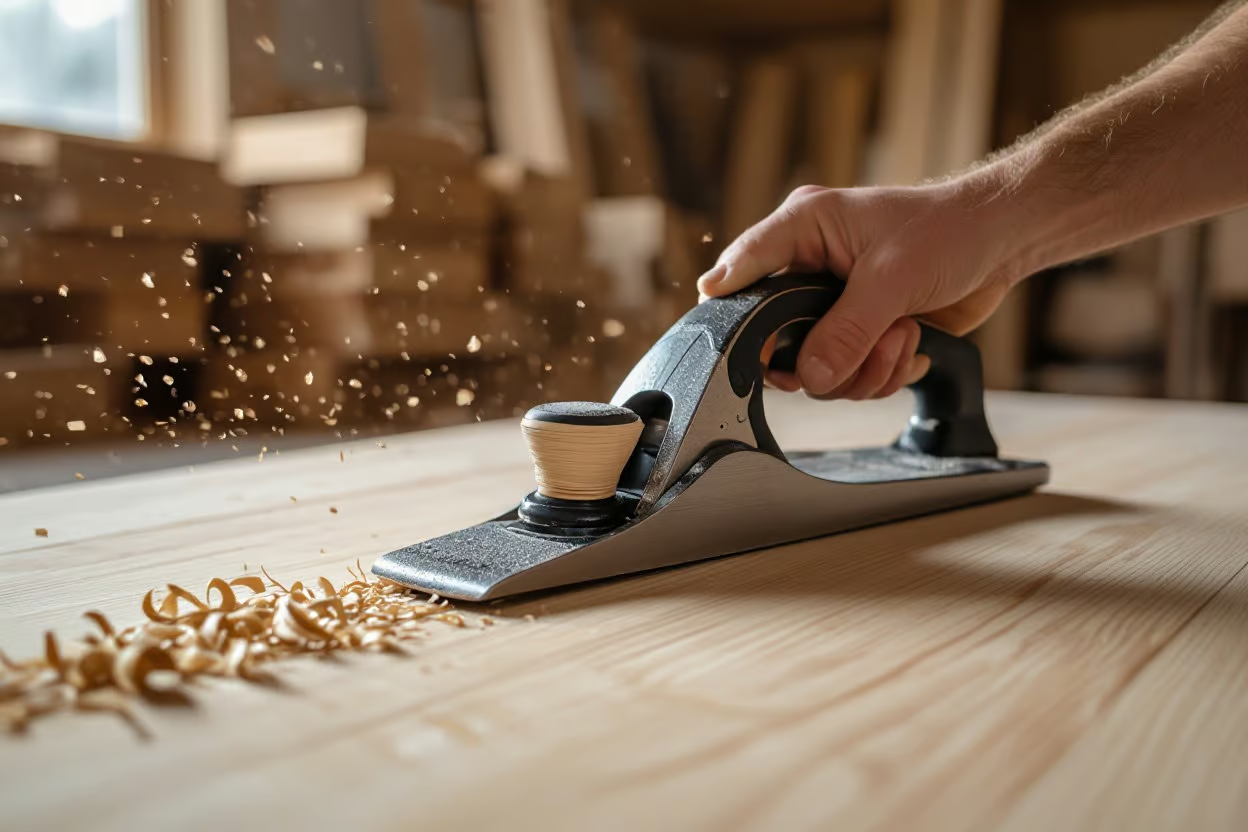
Which plane do you reach for when you need a mirror-like face or a dead-straight edge? You’ll want a handful: a jack for rapid stock removal, a long jointer (22-30″) for straightening edges, a short smoother (7-9″) for finish passes, a low-angle block for tricky end grain, and a shoulder or rabbet plane for tight joinery. The table below lays out typical sizes and quick-use notes.
- Jack Plane – rough dimensioning, 12-15″
- Jointer Plane – edge jointing, 22-30″
- Smoother Plane – final surfacing, 7-9″
- Block Plane – end grain & trimming, low-angle designs
- Shoulder / Rabbet Plane – trimming shoulders, rabbets, tight fits
| Plane Type | Primary Use |
| Jack Plane (12-15″) | Rapid stock removal, can be cambered for rough work |
| Jointer Plane (22-30″) | Flattening long edges and faces for straight joins |
| Smoother Plane (7-9″) | Thin shavings for finish surface, last-pass smoothing |
| Block Plane (3-6″) | End grain trimming, chamfers, small touch-ups |
| Shoulder / Rabbet Plane (6-9″) | Cleaning shoulders, trimming rabbets, working in tight spots |
Techniques for Plane Setup and Maintenance
Want sharp, chatter-free shavings every time? Hone your iron to 25-30 degrees for bevel-down planes, or about 12-15 degrees bevel-up, and leave a micro-bevel of 1-2 degrees; set the mouth to about 0.010-0.020″ for general work, tighter for smoothing. You should check sole flatness with a 48″ straightedge, and expect to rehone or touch up after 6-12 hours of heavy use. The basics make huge practical gains quick.
Start by truing the sole: clamp the plane base to a flat reference like 220-grit sandpaper glued to a granite or thick glass plate and move abrasive with the iron installed to remove high spots, then confirm with a straightedge. When you sharpen, work from 400 to 1000 grit for a working edge and polish to 4000-8000 grit for a razor finish if you want glass-smooth faces; use a diagnostic test-thin 0.002-0.005″ paper shavings-to verify edge contact. Adjust the cap iron (if present) to within 0.005-0.015″ of the cutting edge to reduce tear-out, and deepen the mouth only for fine passes. Keep the iron rust-free with a thin film of oil and store planes blade-down or with the blade retracted; a dull blade is the most common, and the most dangerous, source of bad cuts because you’ll force the tool and lose control.
The Craft of Cutting: Hand Saws Unveiled
Exploring Panel Saws: Rip vs. Cross Cut
Many think a rip saw is merely crude, but you need it for efficient stock removal along the grain; rip panel saws commonly have about 4-6 TPI and run 20-26 inches. Crosscut panel saws use finer teeth, roughly 7-12 TPI, to slice across fibers for a cleaner edge. You should own both – use the rip for quick dimensioning and the crosscut for final length cuts – and keep them sharp and properly set to avoid tear-out.
Specialty Saws for Intricate Cuts
You don’t need every odd tool, but specialty saws let you do things panel saws can’t: a coping saw removes dovetail waste, a fret saw handles scrollwork with blades as fine as 32-64 TPI, and a veneer or flush-cut saw trims thin material without digging in. They come in small frames and shallow kerfs, so thin blades break easily-tension and gentle feeds are important. When you need tight radii or delicate joinery, these are the ones you reach for.
When you’re choosing blades think about radius, tooth count, and frame depth – a coping saw with a 5-6 inch blade and 10-20 TPI is great for dovetail waste, while a deep-frame fret saw with a 12-18 inch throat plus 32-64 TPI tackles tight scroll patterns. Japanese pull saws (dozuki) cut on the pull stroke, giving a thinner kerf and cleaner finish on tenons and dovetails; typical dozuki blades have a reinforced back limiting depth but boosting accuracy. In practice you might use a 6″ flush-cut saw to trim tenon cheeks and a 32 TPI fret blade for violin-style cutouts. Technique matters: keep thin stock supported, tension blades correctly, and feed slowly-that prevents blade breakage and keeps your cuts true.
Chiseling into Excellence: The Role of Wood Chisels
Essential Chisels for Every Woodworker
Which chisels should you buy first to cover most shop tasks? Start with a set of 5-7 bevel-edge bench chisels (common sizes: 1/8″, 1/4″, 1/2″, 3/4″, 1″) plus a dedicated mortise chisel (I prefer 3/8″). Add a 6-8″ paring chisel for delicate work. Vintage high-carbon tools often turn up for as little as $10 each, and a sharp edge is far safer and more effective than a new, dull chisel.
Techniques for Safe and Accurate Chiseling
How do you chisel clean, accurate joints without injuring yourself? Clamp the work tight with a vise or holdfasts, score your lines with a marking knife, then chop with a mallet using short, controlled strikes for mortises and light paring strokes by hand for fine fits. Keep the chisel bevel angle around 25-30 degrees, and always keep your hands behind the cutting edge; wear eye protection when you’re malleting.
Lay out the joint, then make shallow relief cuts about 1/8″ apart when chopping out waste – that helps the chisel remove chunks instead of digging in. For paring, go bevel-up and push with steady pressure, stopping just short of the line and finishing with small, precise slices. Back end-grain with scrap to prevent tear-out, and if the chisel binds, stop and pare rather than swinging harder.
Keeping Edge and Point: Sharpening Tools Essentials
The Importance of Sharpened Tools
With the recent resurgence in hand-tool woodworking you’re seeing people trade power for precision, and that puts the spotlight on sharp edges. A razor-sharp chisel or plane iron cuts clean shavings measured in thousandths of an inch, reduces the force you need by roughly half, and gives you joints that fit tight. If you let tools dull you’ll fight tear-out and waste time, and dull blades are dangerous because they slip-so keep your blades keen and your work safer.
Step-by-Step Guide to Sharpening Techniques
Start by flattening the back, then establish a bevel at the right angle – typically 25-30° for chisels and plane irons, lower for low-angle planes. Use a progression like 400/1000/4000/8000 grit (or diamond plates) to shape and polish, form a burr, then remove it and finish on a leather strop with compound. Use a honing guide for consistency, check edges with a shaving test, and expect 10-30 minutes per tool depending on condition.
Don’t rush the sequence – spend time getting a true flat back and a consistent bevel. Aim to form a burr on the edge at each coarser grit before moving up; that burr is your sign you’ve contacted the apex. Pressing too hard at higher grits just polishes a rounded edge – use light pressure and shorter strokes, then finish with 10-30 light strop passes per side for mirror polish and lasting sharpness.
Form a burr before you move up grits.
Sharpening Steps – Quick Reference
| Step | Action / Notes |
|---|---|
| Flatten Back | Use 400-1000 grit stone or diamond plate until uniformly flat |
| Set Bevel | 25-30° for bench chisels/irons; 12-15° for low-angle planes; use honing guide |
| Progress Grits | 400 → 1000 → 4000 → 8000 (or equivalent) until polished |
| Remove Burr | Flip to back, lap gently to remove burr and square the edge |
| Strop & Test | 10-30 leather strop passes with compound; test by slicing a fine shaving |
Power Meets Precision: The Role of Mallets and Hammers
Choosing the Right Mallet for the Job
Which mallet will give you the power you need without wrecking the workpiece? If you’re chopping with chisels, a wooden beech mallet in the 8-14 oz range gives predictable feedback; for carving and delicate fitting use a rawhide or leather-faced mallet at 6-10 oz to avoid marring; and when you’re knocking glued panels or dowels together a dead-blow or nylon mallet of 16-24 oz reduces rebound and damage. Don’t hit hardened steel chisels with a steel-faced hammer – it can chip the tool or send fragments flying.
Hammer Techniques for Woodworking Success
How should you swing to get repeatable accuracy without smashing things? Grip the handle near the end for power, choke up an inch or two for control, and let the wrist finish the stroke so you get a square, centered hit; a 16 oz smooth-faced hammer is a good all-round choice, while lighter 8-12 oz hammers suit fine work. Avoid glancing blows – they cause splits and flying debris – and use a nail set to sink heads so you’re not smashing the finish.
Stand with your feet shoulder-width, step into the swing and keep your eye on the target – sounds obvious, but it’s the best way to avoid bent nails or chipped edges. When driving a long finish nail start with a few light taps to seat it, then follow with controlled full swings; for joinery use a dead-blow to seat joints without bounce. Inspect hammer faces regularly for mushrooming and file or replace them if they develop sharp edges, and if a head ever feels loose stop and tighten or replace it before you work.
Drilling Deep: Hand Drills and Braces Explored
The Advantages of Hand Drilling Over Power Tools
You can get cleaner, deeper holes by hand than with many power drills. Hand braces and eggbeater drills run at low speeds (typically under 300 rpm), giving you high torque, less burn, and far less tear-out on end grain; a good brace will comfortably drive auger bits up to 1-1/2″. You work quietly, control feed rate precisely, and avoid motor heat that can ruin glue joints or finishes – but only if you use a sharp bit, because dull bits raise effort and risk.
Selecting and Using Hand Drills Effectively
Pick the right bit for the job: brad-point or ship auger bits for clean exits, screw pilots around 1/8″, augers for mortises, and eggbeater drills for fine 1/16″-1/4″ work. Choose a brace for large holes and a ratchet brace for tight spots. Start with a pilot hole when sizing up to larger bits, keep the drill perpendicular, clear chips often, and maintain sharp cutting edges – dull bits = more force and more danger.
Use an awl or center punch to locate the hole, then engage the bit slowly until the spur bites; that initial bite prevents wandering. Crank a brace with your palm on the head and your other hand on the crank-bar for steady, high-torque motion, and withdraw the bit every few turns or roughly every 1/2″ of depth to clear chips on deep holes. Fit a wooden depth-stop or tape to the bit for repeatable depths, and apply a little beeswax or soap when boring dense hardwoods to reduce friction. For maintenance, hone brad-point spurs and lip angles on a flat stone and true auger spirals with a small file; sharp flutes eject chips and keep you in control, so check edges before each session and always clamp the work securely.
Embracing Curves: Tools for Shaping Wood
Types of Curved Tools and Their Applications
In many shops, spokeshaves and rasps handle roughly two-thirds of curved shaping tasks; you’ll rely on them more than you think. Use a spokeshave for fine convex and concave smoothing, a rasp for rapid stock removal, a gouge for hollows and carving, a travisher for shallow seat shaping, and a card scraper for final smoothing; keep blades sharp and watch hand placement to avoid slips. Knowing which tool matches the radius and grain will speed work and reduce tear-out.
- Spokeshave – smoothing convex/concave surfaces
- Rasp – rapid stock removal on flowing curves
- Gouge – hollowing and carving contours
- Travisher – shaping shallow seats and scoops
- Card scraper – burnishing and final smoothing
| Tool | Primary Use |
| Spokeshave | Smoothing and refining convex/concave profiles |
| Rasp (coarse to fine) | Fast material removal on long or complex curves |
| Gouge | Cutting and shaping hollows, bowls, and deep scoops |
| Card scraper | Final clean-up to remove tear-out and burnish surface |
Techniques for Creating Smooth Curves
Progressing from an 80-120 grit rasp to a 120-220 cabinet scraper, then to 320-400 abrasive is a common three-step sequence you can use for smooth hand-shaped curves. Start by laying out radii with a bendable template, remove waste with a rasp or travisher taking measured passes, refine with a spokeshave taking light cuts, and finish with a card scraper; work with the grain to minimize tear-out.
When you shape a chair seat, for example, you might remove as much as 3/16″ with a coarse rasp in the rough stage, then take 0.002-0.010″ passes with a well-set spokeshave as you refine-those numbers keep you from hogging out too much or leaving hard ridges. And use a jig or pattern for repeatability if you’re making multiples. But always test on scrap of the same species first, clamp the work firmly, and keep your thumbs behind the cutting edge to avoid slips; sharp tools and steady, measured strokes are the difference between a clean, flowing curve and a lot of rework.
Working with Green Wood: Techniques and Tools
Understanding the Properties of Green Wood
Green wood carves faster and tells you what it needs. Because freshly cut timber often contains 30-60% moisture it’s softer and accepts shaving and chopping with less effort, but it will also shrink, cup, and check as it dries – expect several percent of movement and uneven drying across the section. You should rough-shape while the blank is wet, stagger drying with stickers or plastic bags, and avoid tight joinery until moisture evens out.
Essential Tools for Carving and Shaping Green Wood
Start with a froe, drawknife, spokeshave and a shave horse. The froe rives logs quickly, the drawknife pares long strokes, and the spokeshave smooths curves; add carving knives, a crook or hook knife for hollows, and gouges from 6mm to 25mm for bowl work. A stout wooden mallet and coarse rasps round out the kit. Keep edges razor-sharp and respect the slipperiness of wet wood – dull tools and wet grips lead to cuts.
When you buy tools, match size to the job: a 12-18 inch drawknife for chair parts, a 10-14 inch froe for riving, and a set of gouges in 6mm, 12mm and 25mm to cover fine to deep hollows. Choose carbon or laminated steels for easy re-sharpening and wooden handles for grip when damp. Practice on willow or poplar to dial in angles and train your body before committing to expensive blanks.
The Art of Holding Fast: Clamping and Fastening
Types of Clamps and Their Uses
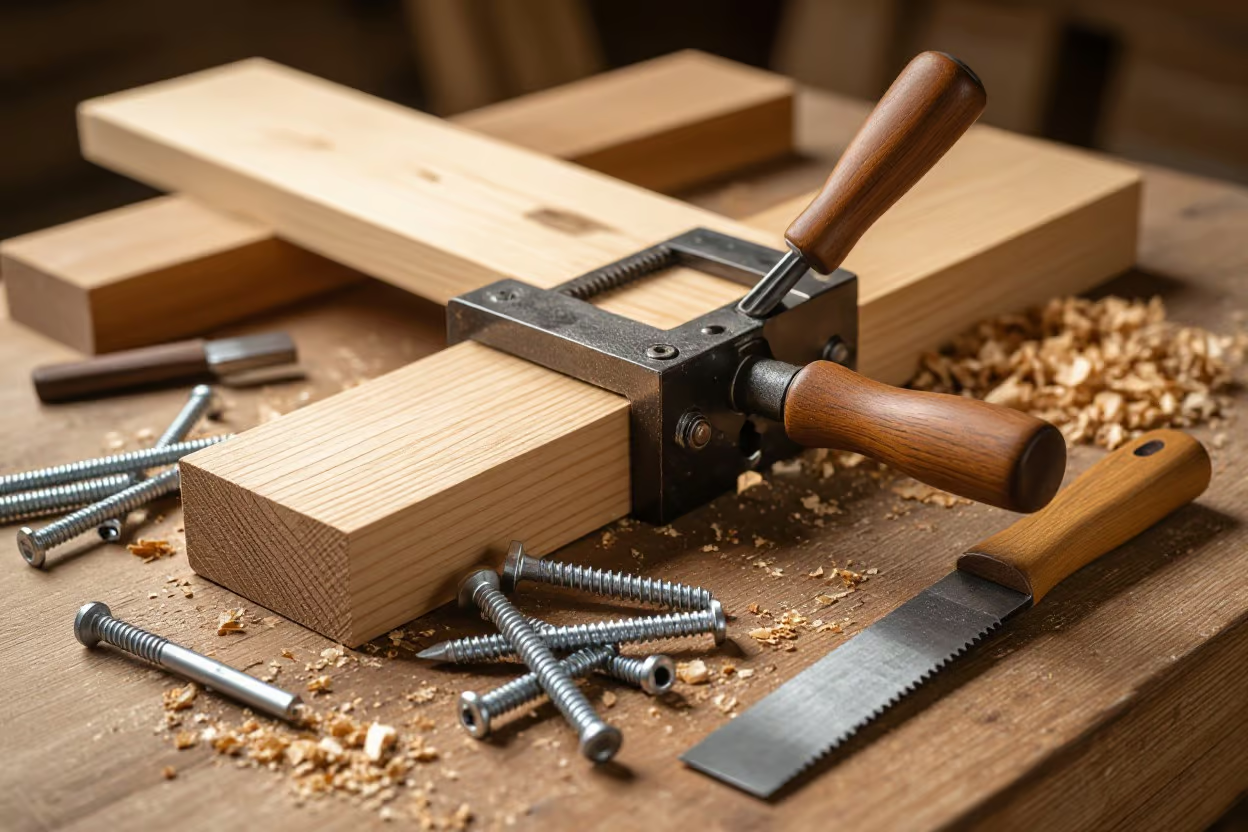
Which clamp do you grab when a glue-up goes wrong? For long panels use bar clamps, for parallel pressure on carcasses use parallel clamps, for long runs use pipe clamps, for irregular shapes use handscrews, and for localized pressure use C-clamps.
- Bar clamps – even pressure on glue-ups
- Parallel clamps – face-frame and cabinet work
- Pipe clamps – economical long clamping
- Handscrews – angled or odd shapes
- C-clamps – small, high-pressure spots
This quick reference helps you choose the right clamp for the job and avoid common mistakes like over-tightening thin stock.
| Bar Clamp | Even pressure on panels and edge-glue-ups |
| Parallel Clamp | Flat, parallel faces for cabinets and doors |
| Pipe Clamp | Long glue-ups; extendable by pipe length |
| Handscrew | Grip angled joints and thin irregular pieces |
| C-clamp | High local pressure for jigs and fixtures |
Techniques for Effective Workholding
Want your joint to close tight every time? Place clamps about every 12 inches on wide glue-ups, use sacrificial cauls to spread pressure, and tighten until the joint just seats then back off a thumb-turn to avoid squeeze-out bulges. Use a tail vise and bench dogs for planing, and protect faces with scrap to prevent dents; over-tightening can split thin stock, so be deliberate with pressure.
When you set up a clamp sequence start at the center and work outward to prevent gaps; for example, use a center clamp, then two clamps 12″ out on either side, and finally end clamps-this evens glue-line pressure. Use plywood cauls or scrap with a bit of waxed paper between caul and work to prevent sticking, and wedge small parts into tapered blocks rather than crushing them with direct clamp faces. If you need repeatable repeatable setups, cut shop-made stop blocks or templates; they save minutes and keep alignment spot-on. And if glue squeeze-out appears uneven, loosen slightly, reseat, and re-tighten-small adjustments beat brute force every time.
From Imagination to Reality: Wood Carving Tools
Essential Tools for the Wood Carver
You don’t need a full shop to carve – start lean. Equip yourself with a carving knife, a few gouges (3mm, 6mm, 12mm or roughly 1/8″, 1/4″, 1/2″), a V-tool (#1 or #2), a small wooden mallet (8-12 oz), clamps or a vise, and sharpening stones (400-8000 grit). Keep a carving glove on your non-dominant hand and understand that sharp tools cut more predictably but are inherently dangerous.
Techniques for Beautiful Wood Carving
You’ll get better results by thinking in stages: rough out big forms, refine planes, then add fine detail. Use push-cuts for sweeps, stop-cuts for crisp transitions, and the V-tool to outline; remove waste with a 12-20mm gouge, then work down to 6mm and 3mm for definition. Take thin shavings – 1-2mm at a time – and work with the grain when you can to reduce tear-out. Under-cutting and tear-out are common problems, so sharpen often and test on scrap.
Start by choosing a soft carving wood like basswood or tupelo; they cut clean and forgive mistakes. Clamp securely, then rough with a 20mm gouge until you’re within 3-5mm of the final profile, switch to 6-8mm gouges for shaping, and finish details with 3mm gouges or a small knife. Hone bevels to about 25-30 degrees and polish to 8000 grit for glassy cuts; that makes a huge difference.
Always keep tools sharp – dull tools slip.
And when you’re finishing, sand progressively (220, 320) and oil lightly – simple finishes reveal detail without hiding chisel marks.
Finishing Touches: Wood Finishing Products
Types of Finishes and Their Applications
Which finish will make your piece sing without causing headaches? Oils like tung and linseed penetrate and warm the grain, varnish (alkyd/spar) gives you long-term abrasion and water resistance, shellac seals and buffs quickly, and lacquer dries fast but is flammable and needs good ventilation. Test on scrap and plan for re-coating times. Any finish you choose should be trialed on scrap to check color, adhesion, and compatibility with your glue or dye.
- Oil – deep penetration, easy maintenance
- Varnish – durable, outdoor and tabletop use
- Shellac – fast, easy to repair
- Lacquer – fast-dry, high gloss
- Wax – low protection, great hand feel
| Oil (Tung / Linseed) | Penetrates, enhances grain; recoat every 1-3 years for high-wear surfaces |
| Varnish (Alkyd / Spar) | Hard, water-resistant; best for tabletops and exterior trim |
| Shellac | Quick build-up and repairable; not ideal for water-exposed areas |
| Lacquer | Fast drying, thin-film; requires spray or good thinning, volatile solvents |
| Wax | Soft sheen, easy buffing; combine over other finishes for feel, minimal protection |
Techniques for Achieving a Flawless Finish
Want a finish that looks factory-made? Start by sanding to a consistent sequence – say 120 to 180 to 220 grit, remove dust with a tack cloth, apply thin coats (thin coats dry faster and sand smoother), and use between-coat sanding with 320-400 grit paper; that cuts dust nibs without burning through. Keep ventilation on and wear a respirator with solvent-based products.
Wet-sanding or using a sanding sealer can dramatically reduce grain-raise on open-grained woods like oak; try a coat of shellac as a sanding seal when using dyes to lock color. Use a random-orbit sander carefully on large panels, and hand-sand edges to avoid rounding them over. For penetrating oils, allow 12-24 hours between coats and rub out with 0000 steel or fine abrasive paste after full cure for a satin-to-sheen finish. If you spray lacquer, keep passes light, overlap 50%, and allow flash times listed by the manufacturer to avoid solvent pop.
Spinning Creativity: Wood Turning Tools
Essential Tools for Wood Turning
Many assume you need a full pro shop to turn-nope. Start with a benchtop lathe (12-16″ swing, 500-3,500 RPM range), a 3/8″ or 1/2″ bowl gouge, spindle gouge, roughing gouge, skew, parting tool, a solid tool rest, live center and a faceplate or 4-jaw chuck. Add calipers and sharpening stones. Keep your gouges sharp, wear a face shield, and respect speed limits because an unbalanced blank at high RPM is dangerous.
Techniques for Mastering Wood Turning
If you think turning is just spinning and slicing, you’re selling it short. Begin on 6-12″ spindle blanks, practice beads, coves and tenons for 30 minutes a day; you’ll build muscle memory fast. Use the bevel-rubbing technique, keep the tool rest at centerline, and run an 8-10″ blank around 1,200-1,500 RPM for shaping. Sand from 120 to 400 grit, finish with friction polish or thin CA, and you’ll see cleaner surfaces in about 10 one-hour practice sessions.
Dig a little deeper: learn push cuts (pulling the handle toward you) for spindle work and shear cuts with a swept-back bowl gouge for bowls-that combination gives you cleaner shavings and fewer catches. Try roughing a bowl at low speed to true up the blank, then increase to 1,000-1,800 RPM for profiling; turn a 1-1/4″ tenon for 4-jaw chuck gripping, or use a screw chuck/faceplate for bowls. Measure wall thickness as you go-down to about 1/8″ for thin-walled pieces-and balance the blank to reduce vibration. And yes, always use a face shield and dust mask, support long work with the tailstock, and never exceed the safe RPM for the blank’s diameter or mounting method.
The Role of Power Tools in a Hand Tools Workshop
Integrating Power Tools with Hand Tools Efficiently
You’re flattening a wide rough-sawn board and don’t want to spend hours with a jack plane – so start with a planer to remove large passes of 1/8″ to 1/4″ and then finish with your jack and scrub planes for surface quality. Use a bandsaw to resaw down to 1/4″ blanks, then hand-scrape and plane for final fit. Keep dust collection on, use push sticks, and set up simple jigs so power tools speed you up without taking away the hand-tool feel.
When to Choose Power Over Hand Tools
If you’re doing repetitive work – say dimensioning 50 board feet or cutting ten identical bars – power tools save hours: a jointer and planer will flatten and thickness multiple boards in minutes. Use power when material removal exceeds what’s practical by hand, or when repeatability matters. But be cautious: table saws and planers can cause severe injuries, so always use guards, push devices, and correct feed rates.
In practice you’ll mix methods: use a bandsaw or table saw to rough-cut stock within 1/8″ of final, then switch to hand planes for final tuning and fit; use a router at 16,000 to 26,000 RPM for consistent profile work, but only after test cuts and a secure jig. For resawing thin veneers pick a narrow 1/8″ blade and run at steady feed; for flattening heavy slabs a router sled can save you a day compared to hand-planing. If you find a task will take more than a few hours by hand, ask yourself if the time saved justifies the setup and the safety precautions you’ll need to take.
The Initial Investment: Crafting Your Tool Collection
Prioritizing Tool Purchases: Where to Start
Don’t assume you need every tool at once – start with a few high-utility items and grow. Get a solid workbench with at least a 3″ solid top, a Jack plane, a low-angle block plane, a set of 5-7 bench chisels, two panel saws (rip and crosscut), and a 6″ combination square; that list mirrors the “Which 20 Tools” approach. Panel saws can be as cheap as $5, used miter boxes under $20. And be careful: those chisels and saws are sharp and can injure.
Building a Comprehensive, Versatile Toolkit
Many think you need a long list of specialized planes right away – you don’t. Assemble a core kit: Jack, block, a smoothing plane later, 1 mortise chisel (I prefer 3/8‑inch), a dovetail saw plus a carcass or tenon saw, sharpening stones, mallet, clamps and a vise. That mix handles the vast majority of furniture and casework tasks, and will keep you productive while you learn to spot good vintage bargains.
You’ll save time and money by buying selectively: vintage chisels often go for about $10 each and can outperform cheap new sets, and a rehabbed plane with a fresh blade will outcut a cheap factory plane every time. Prioritize sharpening gear – a 1000/4000 grit stone and strop will transform your tools. Buy one reliable try square and a small combo square, then add specialized gauges later. Set a working budget – many pros get a very capable starter kit for $200-$500 if they hunt used tools; spend more only on items you use daily. Finally, secure your work on that heavy bench and practice safe cuts – a locked board and steady vise beat speed every time.
The Intersection of Wood and Mastery: Your Workshop
Creating a Workflow-Friendly Environment
With the rise of small-shop woodworking and portable benches, you need to make every square foot pull its weight. Center your 3" solid top workbench at a comfortable height (typically 34-36 inches), create distinct zones for stock prep, joinery, and finishing, and keep your most-used tools within about 24 inches of the bench. Use pegboards, labeled shadow boards, a clamp rack, and a mobile tool cart so you can work left-to-right without hunting for gear; maintain a clear 36-inch aisle for safe movement.
Maintaining Your Workshop for Longevity
Do routine checks every 3 months: vacuum or run your dust extractor after each heavy session, wipe metal surfaces with a thin oil coat monthly, and re-wax your bench top with paste wax every 1-3 months depending on use. Keep relative humidity around 35-55% to avoid seasonal movement in stock, store flammables in a labeled cabinet, and sharpen blades regularly so you don’t force tools and wear parts prematurely.
You’ll want a few seasonal tasks: flatten your bench top with winding sticks and a straightedge once a year, re-bed or tighten vise fastenings every 6-12 months, and inspect belts, bearings, and electrical cords annually. Always run dust collection when using power tools.
Use a 1-2 HP collector or a good shop vac with a HEPA-rated filter for hand-tool-adjacent power use; hang saws with teeth protected and store planes lying flat or in fitted slots to preserve settings. Hone chisels to ~25-30 degrees and strop after each major job, keep a calibrated combination square in a drawer so you can verify layout tools, and log repairs or part replacements so you can spot recurring wear before it becomes a problem.
Summing up
The question is, do you really need all the fancy gear to start traditional hand tool woodworking? You don’t – a solid bench, a few planes, chisels, and saws, plus the habit of sharpening, will get your projects humming. You’ll learn measurement, feel, and control as you go, and your toolset will grow with your skills. So start simple, practice the basics, and you’ll surprise yourself with what your hands and a handful of good tools can do.
FAQ
Q: Which hand tools should I buy first if I want to get into traditional hand tool woodworking?
A: Ever wondered which handful of tools will actually let you make something useful without breaking the bank or filling a shed with gadgets you never use? Start small, and pick tools that cover layout, cutting, shaping, and clamping – that’s basically the workflow. A solid bench or something heavy to clamp to is the foundation, but you don’t need a fancy one to get going; a sturdy table and a few good clamps will do at first. Buy a jack plane (about 5 1/2″ is versatile), a low-angle block plane, a set of bench chisels (5-7 sizes), a rip and a crosscut panel saw, and a 6″ combination square. Those let you dimension stock, true edges, cut joinery, and check layout.
Start with these 6 necessarys: bench, jack plane, block plane, bench chisels, rip and crosscut saws, combination square.
And then add as you go – a dovetail saw, a mortise chisel, a mallet, and a few clamps are the usual next buys. Don’t feel pressured to buy everything at once; invest in a couple of good blades or irons and a decent set of stones for sharpening and you’ll be surprised how far that goes.
Q: How do I keep my hand tools sharp and in good working order without spending a fortune?
A: Want the secret to better cuts and less frustration? It’s simple – sharpen, flatten, and maintain. Start with one good sharpening setup: a coarse and a fine waterstone or oilstone, a leather strop with some polishing compound, and a way to flatten your stones (a diamond plate or lapping plate). Learn to hone the bevel and then polish the edge; you’ll get a better cut and save time on cleanup.
A sharp edge is safer and cuts better.
Don’t skip flattening your plane soles and honing the back of chisels; a slightly warped sole or a micro-chipped back makes work harder. Use light, consistent pressure when honing, and keep a small honing guide if you like consistency – but freehand works once you get the feel. Wipe tools after use, keep blades oiled if stored in humid places, and replace or re-shape handles only if they’re cracked or wobbly. It’s not rocket science – a little routine upkeep every few projects keeps everything happier for years.
Q: Should I buy vintage hand tools or new ones – which is better for a beginner?
A: Ever held an old plane and wondered if the patina meant quality or just rust? Vintage tools can be a fantastic value – thick steel, solid handles, real mass – but they often need cleanup and tuning. New tools come ready to use, with crisp bottoms and fresh ferrules, but some are made of thinner steel or lower-grade hardware. So which side should you pick? If you like a weekend project and can tune a plane, buying used can get you much better metal for less money. If you want to start cutting right away and hate truing soles or rehabbing handles, buy new or buy a restored vintage piece.
Check for pitting on the blade, a flat sole (or one you can easily flatten), handles that aren’t shattered, and hardware that isn’t stripped.
Mixing is smart – snag a couple of restored vintage irons and a couple of new chisels or a new block plane for convenience. You’ll learn to tune and you’ll get the best of both worlds – character and immediate usability.