
Tools clatter while you’re trying to cut a bunch of shelf dadoes to the same width and the panic sets in – sound familiar? You can build a simple jig that makes the job repeatable, faster and worth the time, so your straight cuts, holes are plumb and parts sit square. And yeah, working near blades is dangerous, so a jig that keeps the work snug is a real lifesaver. Want to stop guessing and start cutting like you mean it?
Key Takeaways:
- With the recent boom in DIY maker culture and easy-to-find plans online, folks are building custom jigs again – even 3D-printed bits and downloadable templates are changing the game. Jigs turn fiddly, one-off cuts into repeatable, straight, square results and you’ll use them for years. Why do the same tiny setup a dozen times when a jig does it in one go?
- Make ’em modular and replaceable – think inserts for drill-press tables, sacrificial fences for the table saw and interchangeable guides for routing dados. That way when something’s worn out you flip or swap a part instead of rebuilding the whole thing, and you’re back to clean cuts fast. They save time, wood and a whole lotta frustration.
- Small jigs give huge returns – squaring blocks, linked miter gauges, pegboard hole templates, a spacer in the vise, simple sleds – cheap, quick, and they up your accuracy big time.
Small jigs = big upgrades.
And yeah, they’re safer too, because steady work is safer work, so build a few and keep ’em handy.
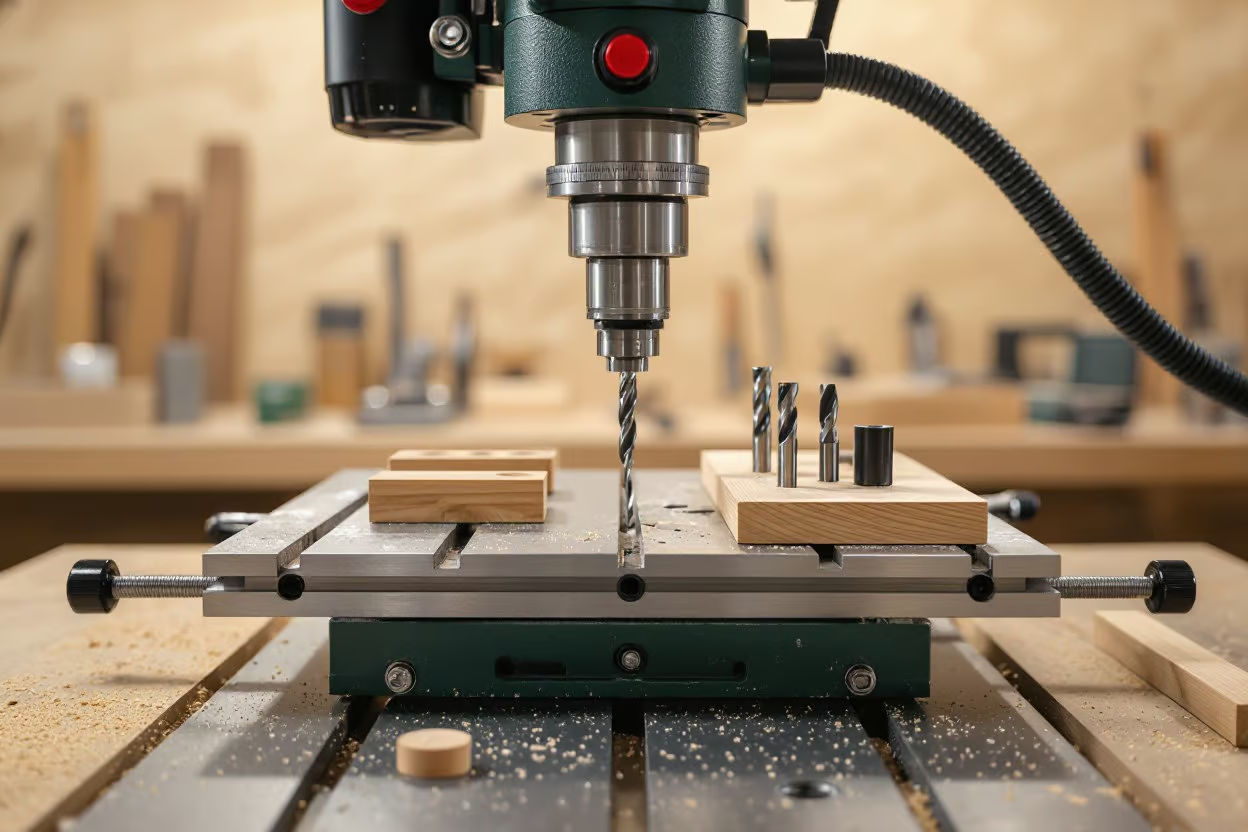
Unlocking Precision: The Power of Drill Press Tables
Don’t assume the stock table will cut it for woodworking – most are built for metalwork and are too small and lack a backing insert and fence. You can build a superior table from three layers of 1/2-in. MDF glued together, fasten it from underneath with four lag screws, and make the top in three pieces so the center insert is loose and 1/8 in narrower than the gap. Fit three flat-head screws in the insert to adjust the fit, keep spares to swap when the insert looks like Swiss cheese, and clamp a plain board for a fence.
Crafting Your Custom Table
If you think a custom drill press table is fiddly, it isn’t – glue three 1/2-in. MDF layers, cut the top layer into three pieces, glue the outer pieces and leave the center as a removable insert that’s 1/8 in narrower. Fasten the whole assembly to the machine with four lag screws from underneath, install three flat-head screws in the insert’s side and tune them until the insert rides snug. When the insert wears out just slide it out, flip or replace it – simple and fast.
Essential Features for Woodworkers
If you think a flat table is enough, think again – woodworking needs a larger surface, a clamped fence, and a replaceable insert so holes drilled through don’t tear out the back. The removable insert (the top layer’s center piece) should be adjustable with three screws and be 1/8 in narrower than the gap to seat snugly; the table should be secured with four lag screws. These features give you repeatable, tear-out-free holes and make drilling small parts safe and accurate.
Don’t treat the insert as an afterthought – set the three flat-head screws so the insert’s sides bear evenly and you’ll avoid wobble. Want a foolproof routine? Make 3-4 extra inserts from the same 1/2-in. MDF, label them, and rotate them when one gets chewed up; flipping an insert gives you four fresh faces. Clamp a simple board for a fence when you need repeats, and always keep the insert snug – it’s the difference between clean holes and shop-sawdust mess.
Dadoes Done Right: Building the Perfect Routing Jig
Many think a 3/4-in. dado is a set-and-forget thing, but plywood often runs about 1/32 in. under nominal, so you need a jig that adapts. You’ll use a 1/2 in. top-bearing trim bit, two long, parallel 1/2-in. MDF guides and a pair of cross members to set the width. Set one guide fixed, make the other adjustable, and you rout the dado in two passes so the space between guides-not the bit-dictates the final fit.
Ensuring Accurate Joint Fit
It’s easy to assume one pass and a clamp will give you a snug shelf, but you should test-fit first. Use two scrap pieces of the same plywood as shims, press them against the fixed guide, then slide the adjustable guide up to them and clamp. Make two routing passes with the top-bearing bit, check the shelf dry-fit, and tweak the guide position until the dado grabs the plywood without forcing it.
Step-by-Step Guide to Construction
Some folks think you need exotic parts – you don’t. Cut two long guides from 1/2-in. MDF, rip 3/4-in. cross members, fasten one guide to the cross members, leave the other loose and clampable. Use two small plywood offcuts as spacers against the fixed guide, slide and clamp the adjustable guide, install the 1/2 in. top-bearing bit and make a pair of passes to finish the dado.
People often believe alignment is finicky – it isn’t if you follow a routine. Set the fixed guide square to the cross members, use two identical plywood shims (same plywood you’ll install), tighten clamps evenly, then run the router with the bearing riding each guide for two passes. Test on scrap, note any tightness or slack, and adjust the adjustable guide in small increments until the fit is right.
Dado Jig: Key Details
| Feature | Specification |
|---|---|
| Guide material | 1/2-in. MDF, two long parallel pieces |
| Router bit | 1/2 in. wide top-bearing trim bit, bearing above cutter |
| Cross members | 3/4-in. stock to mount guides |
| Passes | Two passes – one against each guide |
| Setup method | Use two plywood shims, clamp adjustable guide to cross members |
| Tolerance handled | Compensates for typical ~1/32 in. plywood variance |
Construction Steps
| Step | Action |
|---|---|
| 1 | Cut two guides from 1/2-in. MDF and two 3/4-in. cross members |
| 2 | Fasten fixed guide to cross members; leave adjustable guide unattached |
| 3 | Place two plywood offcuts against fixed guide as spacers |
| 4 | Slide adjustable guide to contact shims and clamp firmly |
| 5 | Install 1/2 in. top-bearing bit, set router depth for full dado |
| 6 | Make two passes, riding the bearing on each guide; test on scrap |
| 7 | Adjust guide position in small increments until fit is perfect |
Protect Your Investment: The Benefits of a Sacrificial Table Saw Fence
Oddly, the cheapest upgrade often prevents the costliest mistakes: a sacrificial fence made from four layers of 1/2-in. MDF costs under $25 and takes 30-60 minutes to build, yet it stops you from nicking a factory fence that can run $100+ to replace. You get repeatable zero-clearance cuts, full clamp access up to the blade, and the freedom to flip or replace faces until the whole thing’s spent. That buffer keeps your saw accurate and your real fence pristine.
Avoiding Damage to Your Main Fence
Most fence damage happens when you clamp jigs or push narrow stock tight to the blade and accidentally bite the fence; one nick throws alignment off and ruins cut accuracy. Use the sacrificial fence as your sacrificial buffer so clamps bear the hits, not your factory fence. Set the sacrificial fence square, tighten clamps, and cut-your real fence stays untouched. Don’t let one bad cut wreck your setup.
How to Construct Your Own
You can make a stout sacrificial fence in under an hour: glue four 1/2-in. MDF layers together (3/4-in. plywood works too) to a length matching your saw, then cut the middle layers into thirds to create clamp-clearance holes so clamp heads won’t foul the cut. Make the assembly 2 in. thick total, trim to match your fence height, and clamp it to the factory fence. Cheap, replaceable, and effective.
If you want specifics: cut four strips 24-36 in. long by the same height as your fence (3-4 in. is common), glue and clamp them, then trim flush. Drill three 1/2-in. holes through the center layer for bar-clamp heads and countersink screw heads on the back. When one face gets beat up, rotate faces or build another-one build usually gives you 8 usable faces. Keep clamp heads clear of the blade path.
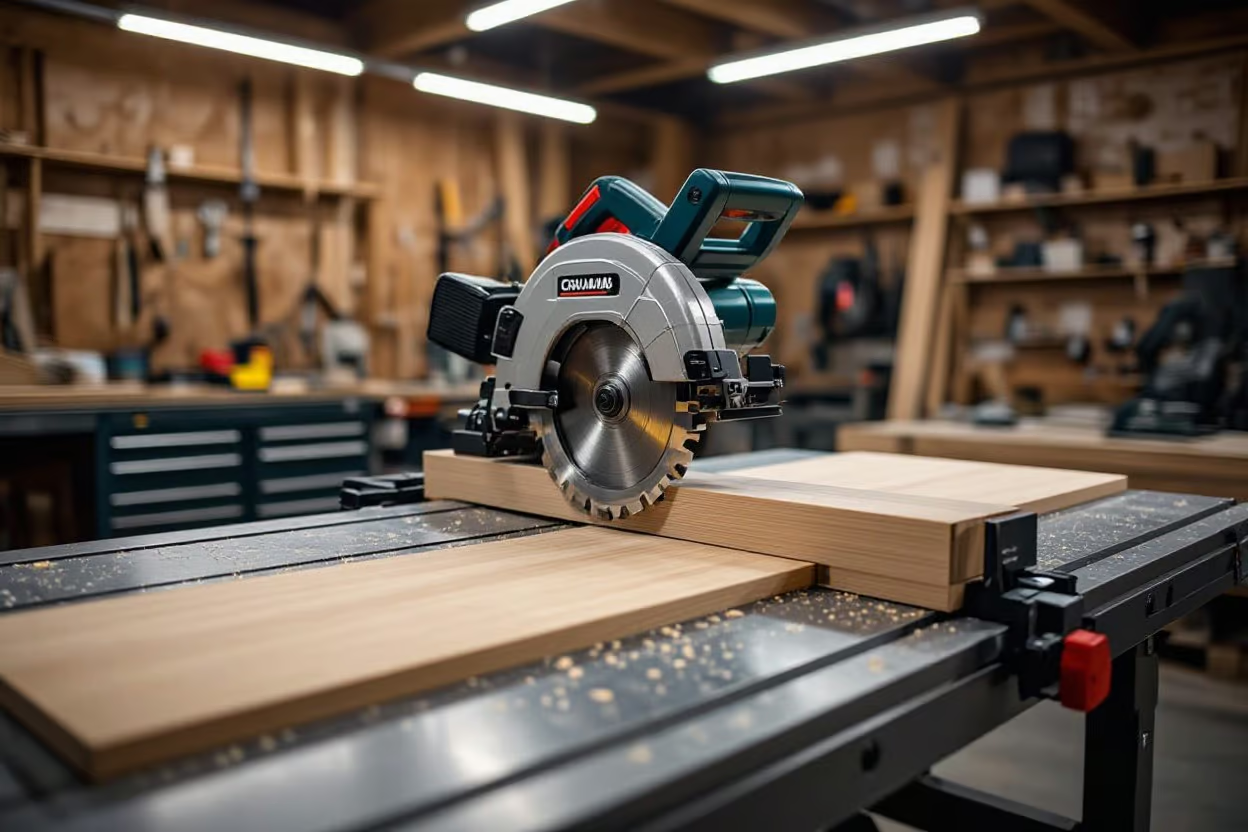
Cutting in Style: The Versatility of a Table Saw Guide Box
When you’ve got narrow picture-frame stock standing on end and the fence just can’t support it, this 8-in. square, 5-1/2-in. deep melamine box is your go-to. It’s screwed to optional 12-in. runners and holds the work with a screwed-on support block so you get an absolutely straight cut. Clamp the piece to the box and use a toggle clamp for the lower end – that keeps the cut steady and your fingers well away from the blade.
Enhancing Stability for Vertical Cuts
Set the box so the board bears against the internal support block and rides the runners; that eliminates wobble when you feed stock vertically. The 5-1/2-in. depth gives plenty of side support for thin moulding, and you can add a sacrificial strip where the blade exits to protect the box. Always clamp the workpiece firmly-use the toggle clamp for the lower end since the fence often blocks a regular clamp-and test a scrap first to dial in alignment.
Customizing for Various Applications
You can swap the 45-degree support for a 90-degree plate to cut tenons, or add a narrower block to index ends for spline slots-modularity is the whole point. If you plan repeat cuts, screw on a removable stop and mark it; a simple stop set 4 in. from the blade makes repeatable picture-frame end cuts quick. The box’s design lets you tailor supports for stock from 1/8 in. trim up to 2 in. rails.
For quick mods, make several interchangeable supports: one 45-degree, one 90-degree, and a slim 1/4-in. finger for shallow spline grooves. Fasten them with 3/4-in. screws into predrilled holes so you can swap parts without mess. Position the toggle clamp about 3 in. from the box’s lower front so it holds the piece against the block but doesn’t interfere with the blade or runners; test with a scrap to verify stop placement and cutting clearance.
Eliminating Wobbles: The No-Wiggle Miter Gauge Method
Like replacing a loose wheel, tightening up your miter gauge transforms every crosscut-use two gauges joined by a long fence to lock the workpiece and kill lateral play. Glue two pieces of Baltic birch to form an L-shaped body, fit a maple or 1/4-in. tempered hardboard bar to the miter slot, and set it square with spring clamps before you finish the glue-up. Test with a square and a 1-in. test cut until there’s no wiggle and cuts are repeatable; be aware you may lose the factory guard, so add a shield.
DIY Miter Gauge Construction
Compared to buying an aftermarket unit, making one is cheap and precise: glue two Baltic birch pieces for the body, rabbets and clamp while the glue cures, then cut and fit a bar from maple or 1/4-in. tempered hardboard so it slides with slight resistance in your saw’s slot. Use spring clamps to hold the bar at exactly 90 degrees until the glue sets, then lock it with screws and fine-tune the fit with a file or sandpaper until you get a snug, zero-play fit.
Safety Enhancements for Your Setup
Unlike stock fences, this paired-gauge setup often prevents you from using the saw’s guard, so add a clear plastic shield to the fence, and always use a push stick, featherboard and clamp the workpiece-those simple aids cut the chance of a finger getting too close. Wear eye and hearing protection, use dust collection, and keep your hands behind a push device when the blade is spinning; that’s where most mistakes become serious.
For the shield, use 1/8-in. polycarbonate or acrylic so it’s tough and translucent; drill slotted holes and mount with carriage bolts and wing nuts so you can adjust or remove it quickly. Place a featherboard 1 to 2 in. in front of the blade to hold stock against the fence, fit a toggle clamp for short parts, and install anti-kickback pawls or a riving knife if your saw will accept them. When ripping pieces under about 6 in. use a push stick or push block every time, and make a couple of trial cuts on scrap to verify the gauge alignment and shield clearance before you cut your parts.
Squaring Up: The Importance of Squaring Blocks in Cabinetmaking
If your cabinet isn’t square, doors won’t hang true and hardware binds, so you use squaring blocks during glue-up to lock corners at 90 degrees. You make the block from plywood about 8 in. square and verify the inside corner with a combination square. Screw two 3/4-in. x 2-3/4-in. x 7-in. lips to adjacent sides for clamping, leave a gap at the inside corner to clear glue squeeze-out, and clamp the blocks to the case before putting the final squeeze on the clamps.
Crafting Effective Squaring Blocks
You start with a flat scrap of plywood roughly 8 in. square and check the corner with a combo square so it’s dead-on. Screw the two 3/4-in. x 2-3/4-in. x 7-in. lips to adjacent edges so the clamp jaws have purchase; set the lips to protrude just enough to clear your clamping hardware. Make a couple of spares and mark the faces-flip or swap them when one side gets chewed up, that way your setup stays repeatable.
Best Practices During Assembly
Before the glue sets you should clamp the blocks to the case and measure the diagonals-if the readings match within 1/32 in. you’re in great shape. Use at least two clamps per block, apply even pressure, and protect finished faces with thin cauls or scrap strips. Clean glue squeeze-out from the inside-corner gap while it’s wet so you don’t trap cured glue that can pry parts out of alignment.
Dry-fit and mark mating faces so you can reassemble the same way – this saves you from surprises once glue is involved. Measure both diagonals and aim for equal readings within 1/16 in.; start clamps light to seat everything, then tighten opposite corners incrementally rather than cranking one clamp full-on. If a corner binds or gaps, back off and reset the squaring block – over-tightening is a fast route to a skewed case and doors that never hang right.
Conclusion
Hence, jigs can cut layout and cutting errors by as much as 50%, so they’re not just fancy scraps of wood. When you make a drill-press insert, a sacrificial fence or a routing guide you’ll save time, get repeatable results and stop cussing at wonky parts. Want tight dados and square cases? Make the jig, use it, tweak it – it’ll become one of those shop habits you can’t do without.
FAQ
Your shop will make more perfect parts with a handful of well-built jigs than with a pile of fancy toys – and I’ll prove it below.
Q: What are the first jigs I should make if I’m building a basic workshop?
A: Start with jigs that save time and stop dumb mistakes. A drill-press table with an insert, a sacrificial table-saw fence, a simple table-saw guide box, squaring blocks, and a multi-layer pegboard spacer cover a huge chunk of everyday work. They give you straight cuts, clean through-holes, and square glue-ups – stuff that makes everything else go smoother.
Make the drill-press table from three layers of 1/2-in. MDF so you can swap inserts when they get beat up. The sacrificial fence is just stacked MDF that you replace when it wears out. The guide box steadies boards end-on for ripping or slotting. Squaring blocks hold corners at right angles while glue dries. The pegboard spacer gives repeatable holes for shelf pins – and using three layers makes it last longer.
These are the sorts of jigs you’ll use over and over. They’re cheap, fast to build, and they pay for themselves in less scrap and fewer headaches.
Q: How do I build a practical drill-press table insert that’s easy to maintain?
A: Make a tabletop from three laminated layers of 1/2-in. MDF, fasten it under the press table with four lag screws, and cut the top layer into three pieces so the center piece becomes a replaceable insert. Give the insert about 1/8 in. less width than the gap so it slides in and out. Install three flat-head screws in the side of the insert and use them to tweak the fit until it’s snug but removable.
If the insert gets full of holes, slide it out, flip it, or swap in a fresh one. Keep a few extras on hand – they’re small and cheap to make, and you’ll be glad you did.
Clamp a plain board as a fence when you need to drill rows or back up through-holes. The fence doesn’t need to be fancy, just steady and square to the bit.
Q: What’s the best way to keep jigs accurate over time so they don’t let you down?
A: Treat accuracy like a habit, not a miracle. Use solid reference faces and zero-clearance edges where the bit or blade touches the jig, clamp parts when you set them up, and design replaceable sacrificial faces so you can refresh the contact surface without rebuilding the whole jig. For example: make a table-saw fence from multiple MDF layers so you can use every face before making another fence.
Use mechanical alignment tricks for repeatability. Bolt pegboard layers together with 1/4-in. machine bolts, washers, and nuts so the holes line up while glue cures. For miter-saw or table-saw jigs, cut a zero-clearance slot so you can line up a pencil mark exactly where the blade will hit. And if your miter-bar wiggles, make a second miter gauge and join them with a fence to stop the wobble.
Small adjustments matter. Spacers to keep vise jaws parallel, a plastic shield on a wide miter fence to warn your hands, and flipping or replacing inserts will keep your jigs working like new.