
Over time picking lumber is like choosing a partner – get the wrong match and joints split and you waste cash, get the right one and your piece lasts generations. You need to know what moves, what holds up, and where the trouble spots are; sounds like a lot, yeah? But I’ll cut through the jargon so you can pick stable quartersawn boards and durable hardwoods that save headaches and keep your work looking pro.
Key Takeaways:
-
Ever wonder which boards actually stay put when humidity flips from summer to winter? Wood moves mostly across the grain, not along it, so pick quartersawn or vertical-grain for rails, door frames and tool beds when you need minimal movement. Quartersawn also gives that nice ray-fleck on oak and it just behaves better over time, you’ll thank yourself later.
Use quartersawn or vertical-grain for parts that must stay stable.
-
Want to save cash but still build something that lasts? Mix hardwoods and softwoods – hard species for tops, vices and wear surfaces, softer or cheaper wood for carcasses, backs and hidden parts. Check Janka hardness numbers instead of assuming “hardwood” means hard; a little planning goes a long way.
Hard and soft woods both have places – use them where they make sense.
-
Stumped at the lumberyard? Learn to read end grain and milling cuts (flat-sawn, rift, quartersawn), carry a block plane to shave off end-sealer if you have to, and dig through boards for vertical-grain you can rip from a wider board. Ask the mill how the wood was cut, consult a Janka chart, and don’t overpay for pretty-function matters.
Inspect, ask, and pick the best piece – buying smart beats buying by name.
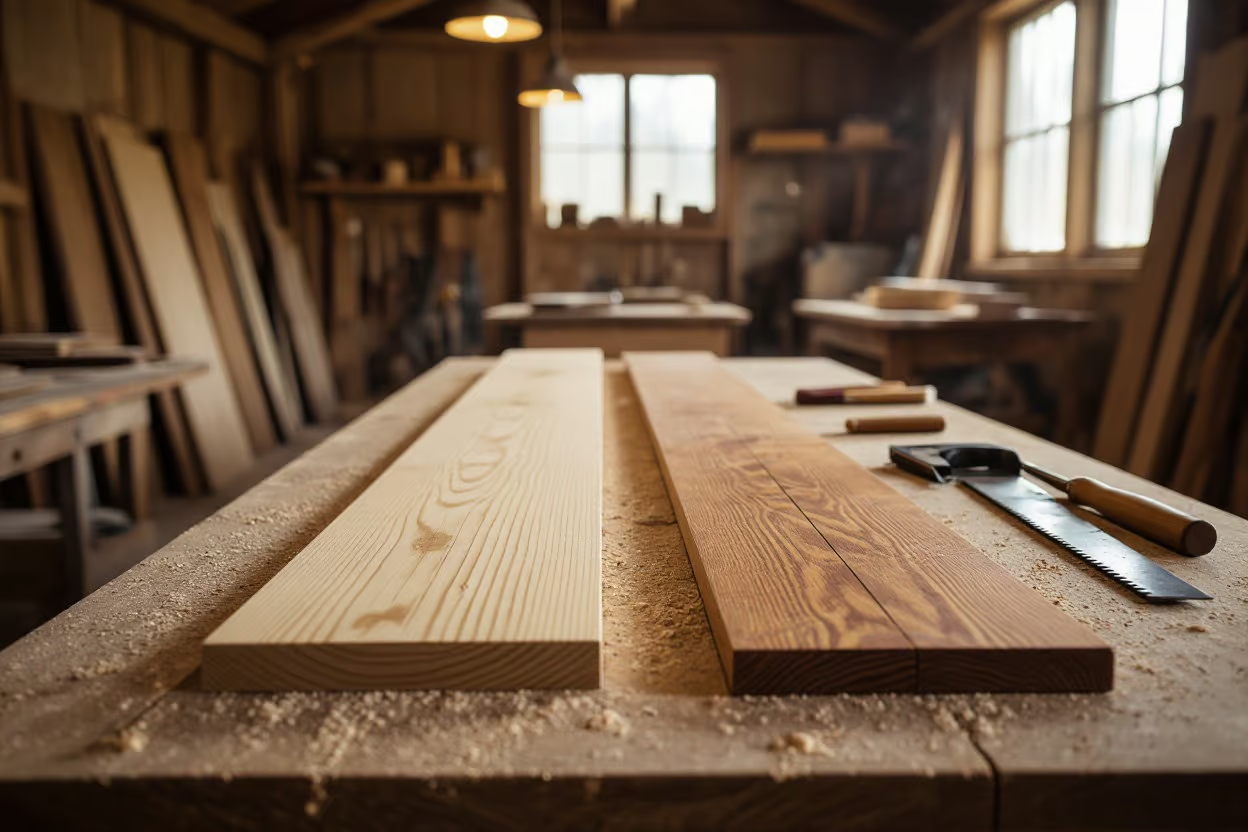
The Battle of Softwoods and Hardwoods
Unique Qualities of Hardwoods
About 60,000 species of hardwoods exist worldwide, and many of the common furniture species you’ll work with have high Janka ratings-white oak around 1,360 lbf and hard maple near 1,450 lbf-which is why you pick them for tabletops and butcher-block work where wear resistance matters. You’ll notice hardwoods tend to have tighter, more varied grain patterns, higher density, and better edge-holding for joinery; that means cleaner dovetails, snappier mortise-and-tenon shoulders, and surfaces that take finishes differently than softwoods do.
But don’t assume all hardwoods are hard – species like butternut (~460 lbf) and basswood are soft and super easy to shape, so you’ll use them where carving or low cost matters. And because many hardwoods are slower-growing, you’ll pay more for clear, wide boards and for exotic species; so match the wood’s mechanical properties and appearance to the part of the piece, not just pick the fanciest name on the sticker.
Characteristics of Softwoods
Eastern white pine sits around 380 lbf on the Janka scale and Douglas fir about 660 lbf, so softwoods are often lighter, less dense, and more forgiving to cut and plane, which is why you’ll commonly see them used for carcasses, shop-built fixtures, and under-frames. You’ll find knots, resin pockets, and wider growth rings more often in softwoods, which gives you quick stock removal and lower cost but also means more tendency to dent or nick in service.
So when should you use softwood? Use it where weight, cost, or sonic qualities matter – spruce for soundboards or pine for painted casework – and avoid relying on softwood for wear surfaces unless you accept that it will mark up. And don’t forget: some softwoods like southern yellow pine (~870 lbf) can out-harden a softer hardwood, so always check the species specifics rather than the label.
When deciding on softwood at the yard, look at growth-ring spacing and clear grade; tight rings and knot-free sections will behave better when you plane, glue, and finish, and if you need stability for things like frames, try to find vertical-grain cuts or plan to use a hardwood face where movement or edge wear is a concern.
Understanding the Janka Wood Hardness Test
The Janka test uses a 0.444-inch steel ball and reports force in pounds-force; for example hard maple scores about 1,450 lbf while eastern white pine is about 380 lbf, so you can quickly compare dent resistance between species. You’ll use these numbers to decide what goes on a tabletop, a floor, or a tool sole, because a higher Janka number generally means better resistance to indentation from daily use.
But the Janka number isn’t the whole story: it measures only the force to embed that steel ball and doesn’t tell you about bending strength, stiffness, stability, or how the wood will take glue and finish. So use Janka as a comparative tool alongside other data like modulus of rupture, shrinkage rates, and your own experience with how a species planes and holds an edge.
To make it practical: classify species roughly by Janka bands when choosing materials – under 500 lbf = very soft (easy to work, dents easily), 500-1,000 lbf = moderate (good for many furniture parts), over 1,000 lbf = hard (best for wear surfaces and edges) – and always factor in moisture content and board selection, because two boards of the same species can perform very differently depending on how they were milled and dried. Use Janka for comparison, not as the final decision maker.
Exploring Quartersawn Wood
Defining Quartersawn Lumber
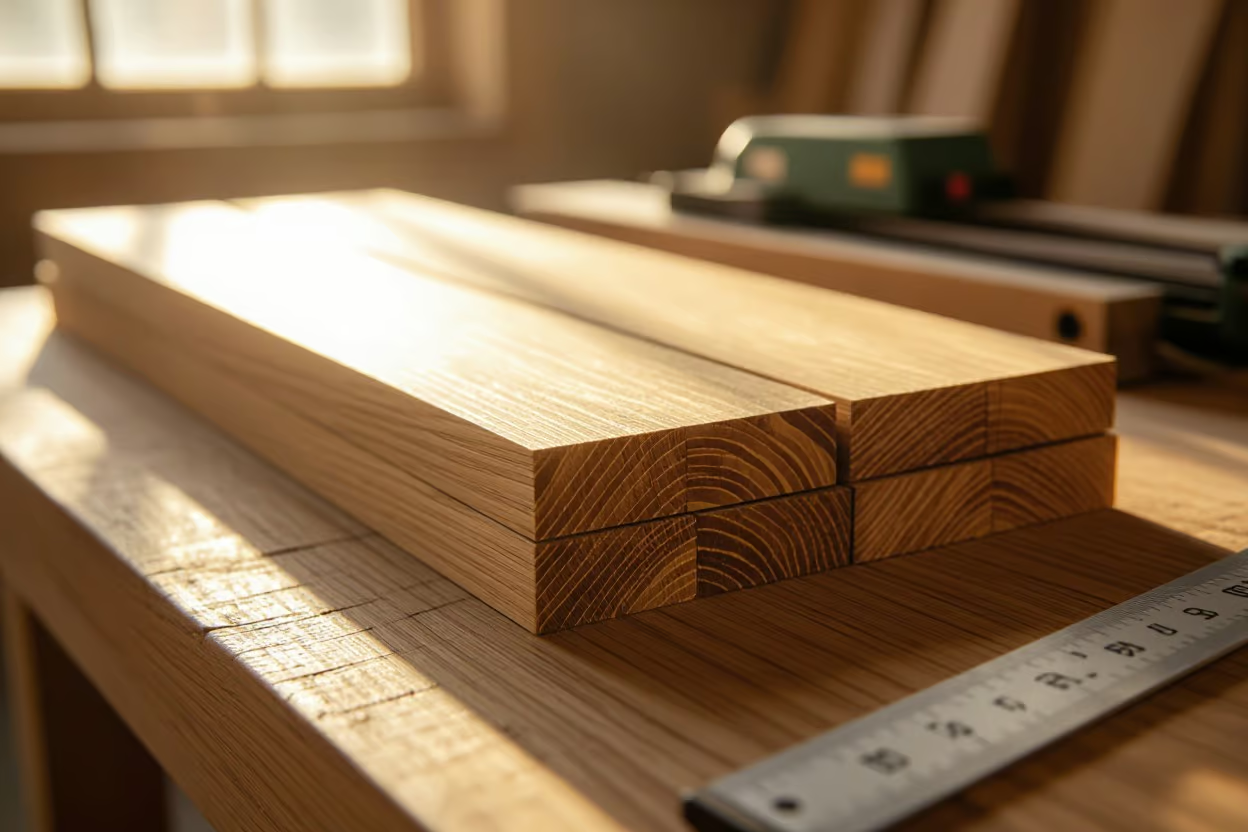
Quartersawn lumber gives you vertical grain and far less seasonal movement than plain-sawn boards. It’s made by first quartering a log and then sawing boards so the growth rings intersect the face at roughly 60-90 degrees, which produces that straight, upright grain and the characteristic ray-fleck on species like white oak. You’ll get less tangential shrinkage because the board’s face is closer to the radial plane of the log – radial shrinkage is roughly half of tangential shrinkage – so the board won’t cup or crown as dramatically as flat-sawn stock.
To spot it at the yard look for narrow, nearly parallel ring lines on the end grain or the flecked figure on the face in oak. Mills will often separate and charge more for quartersawn stock because the yield is lower – expect a smaller percentage of the log to produce quartersawn boards and a typical price premium in the yard for wider, quartersawn widths.
Benefits of Quartersawn Wood in Projects
Use quartersawn where dimensional stability matters – door and drawer rails, table aprons, instrument parts, and tool soles. It minimizes cupping and edge movement, so joints stay tight through humidity swings; that’s why you’ll see it used for 5-piece doors, chair rails, and wide cabinet stiles. And because the grain runs straighter, glue joints and veneers tend to behave better over time, reducing the likelihood of glue-line failure in long members.
Beyond stability you get aesthetic and wear advantages: quartersawn oak displays ray-fleck that takes stain and oil differently, producing a premium look; on flooring and workbench tops it wears more evenly. The trade-off is cost and availability – very wide quartersawn boards are rare, so you may pay a 20-50% premium or need to resaw flatsawn stock to get the vertical-grain pieces you want.
For a quick practical rule: if you’re building a component that must resist width-change – think long rails, wide frames, or hand-tool soles – choose quartersawn where you can; it’s often the difference between a piece that needs seasonal tweaking and one that lives happily in your shop for decades.
Navigating Wood Milling Cuts for Stability
Flat Sawn / Plain Sawn Wood: The Most Common Choice
Most of what you’ll find at big-box stores and many hardwood yards is flat sawn – often making up 60-80% of common dimensional lumber because mills get the highest yield that way. You get the classic cathedral grain on the face, more board feet per log, and the lowest price, but that comes with a trade-off: flat sawn boards have growth rings that sit at a low angle to the face (roughly 0-30 degrees), which means they’re the most likely to cup, twist, and move across their width as humidity changes.
If you’re building wide panels or long rails, you’ll notice the difference quickly: a 1×8 flat sawn oak is more likely to show cupping than a quartersawn piece the same size. Use flat sawn where cost and appearance matter more than dimensional stability – case sides, drawer parts, or decorative faces – and plan joinery to allow for movement when you do.
Rift Sawn Wood: A Step Up in Stability
Rift sawn sits between plain and quarter cuts in both appearance and performance; the growth rings usually cross the face at roughly 30-60 degrees, producing a straight, tight grain that many woodworkers like for clean, linear looks. It’s a solid choice when you want more stability than flat sawn and a straighter grain than quartersawn, so you’ll often see rift sawn used for chair legs, table aprons, and Mission-style furniture.
Because rift sawn yields fewer boards per log than flat sawn, expect to pay more – not as much as quartersawn typically, but enough that it’s a conscious budget decision. When you inspect end grain at the lumber yard, rift sawn shows narrow, nearly parallel rings rather than the broad cathedral pattern of flat sawn or the near-vertical lines of quartersawn.
Tip: if you need long, straight-grained pieces for turned or structural members and want to limit seasonal movement without the premium of quarter, ask your supplier for rift sawn-it’s a practical compromise that performs very well for parts that must stay true.
Quartersawn Wood: The Stability Champion
Quartersawn is the go-to when you need the least movement possible; boards cut to give near-vertical grain (about 60-90 degrees to the face) shrink and swell far less across the width compared to flat sawn, so you’ll see it specified for door rails, frames, plane soles, and bench tops. In white oak you also get that beautiful ray fleck figure, which is why quartersawn oak is prized in both furniture and flooring.
You’ll pay a premium because the process yields fewer boards per log and requires extra handling, and many yards segregate quartersawn stock into a special section. For parts where stability matters most – rails and stiles that hold panels, long edges that must stay flat, or measuring tools – quartersawn is often worth the extra cost.
When you’re at the yard check the end grain: quartersawn boards show growth rings that are nearly perpendicular to the face and are commonly sold in wider widths when they come from older growth timber. If you need the most predictable movement, specify quartersawn and note that for some species the visual ray figure is an added aesthetic benefit as well as a performance one.
Riven Wood: Nature’s Strength
Riven (or rived) wood is split along the grain rather than sawn, so the fibers remain continuous and the piece follows the wood’s natural orientation – that gives you exceptional shear strength and resistance to twisting, which is why traditional chairmakers, boatbuilders, and timber framers used riven stock for critical components. It’s not smooth off the bat; surfaces are rough and thickness varies, so you’ll need to dimension and plane it, but the structural benefits can be substantial.
Availability is limited compared to sawn lumber and mills that rive are rarer, so plan ahead if you want riven material: expect to pay more for the labor and to have to process it in your shop. Use it where fiber continuity and strength trump appearance – spokes, rungs, certain framing members – and pair it with sawn stock where flat faces are required.
If you want riven wood for traditional joinery, contact local sawmills or heritage timber suppliers; specifying species like oak or ash and indicating you want riven billets or clouts will help mills set aside the right material, and you’ll often get pieces that outperform equivalent sawn stock in long-term stability and load-bearing tasks.
Identifying and Avoiding Lumber Defects
The Impact of Knots on Aesthetics and Strength
Knots change a board’s look and its load-bearing capacity in very different ways. You’ll get beautiful character from tight, well-seated knots in species like pine or cherry-those can be the feature you’re after-while large or loose knots create stress risers that reduce tensile and shear strength, especially in long grain members. As a rule of thumb, a knot that’s larger than about one-third of the board width is likely to cause problems in structural parts or long rails; in furniture faces you may accept larger knots for appearance, but expect more movement and potential voids.
When you’re at the yard, press on suspected knots and look for cracked glue lines or soft spots: loose knots that can be levered out will leave voids and may need plugs, epoxy, or mechanical fastening to be safe. Also factor in finishing problems-knots often contain pitch or resin that can bleed through finishes and blunt blades during planing-so plan on extra prep like solvent cleaning, spot-sealing, or using a shellac cut to seal bleeding knots before topcoating.
Understanding Sapwood and Insect Damage
Sapwood looks lighter and is more permeable than heartwood, and that matters because it accepts stain unevenly and often has lower natural durability. Some species, like white oak or walnut, show a sharp contrast between sapwood and heartwood, so if you need uniform color you’ll want to avoid wide sapwood areas. Sapwood is also the first place many wood-boring insects attack, so visually inspect the board edges and end grain for small pinholes or tunneling.
Small exit holes roughly 1/32 inch to 1/8 inch in diameter with fine powdery frass are classic signs of powderpost beetle activity; fresh frass or loose sawdust in a board’s surface means the infestation is active. You should not buy boards with active holes or fresh frass-active insect holes or fresh frass mean don’t buy. Kiln-dried lumber from reputable yards is far less likely to harbor live larvae, and borate treatments can prevent reinfestation in workshop stock.
When you need to be extra safe, ask the seller about the lumber’s kiln schedule and storage history, check multiple boards from the same lot for holes, and tap suspected areas-hollow sounds can reveal internal tunneling. For finished pieces that will live indoors, acclimate and then seal end grain and exposed sapwood with a penetrating sealer or a borate-based preventative to reduce long-term risk.
Recognizing Wood Movement Defects
Cupping, bowing, twisting and checks all start from how the board was cut and how it dried; you’ve seen this: a 6-foot flat-sawn pine board can cup a quarter inch or more across the width if the face grain was exposed to uneven drying. Tangential shrinkage is roughly twice radial shrinkage across most species-typically tangential in the 6-12% range and radial around 3-6% from green to oven-dry-so flat-sawn boards are much more prone to dramatic width change than quartersawn boards.
Spot defects at the lumber yard by laying boards on a flat surface with a straightedge or by using winding sticks: a bowed board will show a measurable gap when you sight down the length, twisted boards will rock, and severe cupping shows as a clear arc across the face. Severe cupping or large checks are expensive to fix because you’ll have to remove material or resaw, so avoid those boards for tabletops or panels where flatness is crucial.
Reduce risk in your projects by measuring moisture content with a meter before buying-if a board reads far above your shop’s equilibrium moisture content (for many shops that’s 6-8%), expect movement-and plan joinery accordingly: floating panels, breadboard ends, or mechanical fastenings that allow seasonal movement will save you headaches. Also, acclimate lumber for days to weeks depending on thickness, sticker-stack it flat, and use quartersawn boards for parts that must stay stable over time.
The Hunt for Quality Lumber Sources
Local Saw Mills: Your Community Resource
I once drove 25 miles to a small family-run mill and came away with rough-sawn white oak, red oak, and a few live-edge slabs for less than the per-board-foot price at the big hardwood yard; you can do the same if you’re willing to dig and talk to the mill owner. Mills often sell in rough dimensions (4/4, 8/4, 12/4) and in bulk, so you can get wider boards, quartersawn sections, and unusual yields that aren’t on store shelves.
Call ahead and ask about drying method and current moisture content – some mills air-dry for 6-36 months while others will kiln-dry in-house and can provide an MC reading on request. Because you can see the logs and the milling pattern, you’re better positioned to pick boards with desirable end grain and stability, but also be aware that rough-sawn mill stock often needs flattening and surfacing once you bring it to your shop.
Specialty Hobby Stores: A Hidden Gem
On a Saturday I stopped into a local Woodcraft and found perfectly surfaced 4/4 hard maple and a stash of figured walnut boards sliced into convenient widths for door frames and small furniture parts – it saved me a day of milling. These stores cater to hobbyists, so you’ll find project-sized boards, turning blanks, and figured pieces in manageable quantities, plus staff who can suggest substitutes if a species or cut is out of stock.
Prices are typically higher per board-foot than buying rough from a mill, but the convenience of surfaced, straightened S2S or S4S stock and the ability to buy single boards without minimum orders makes hobby stores ideal when you need a specific size or figure quickly. Also check their clearance bins and sample packs; you can often score offcuts or veneer sheets that are perfect for small projects.
Many hobby stores also offer value-added services – resawing, custom cutting, and small runs of planed boards – so if you need a matched set of rails and stiles or a handful of consistent thickness boards, they can save you time and reduce waste.
Online Lumber Shopping: Pros and Cons
I ordered figured cherry and a pair of matching boards from an online supplier once and the photos were accurate, but the shipping left one board dinged and the moisture content 2% higher than advertised; online buying can be a win or a headache depending on the seller. Websites give you access to rare species and wide inventories that local sources rarely stock, and you can compare Janka hardness, board dimensions, and prep options in minutes.
Online Lumber: Pros and Cons
| Wide selection (exotics, large slabs, matched sets) | Can’t inspect grain or stability in person |
| Convenience – shop from home and ship to shop | Shipping damage risk, especially for large or thin boards |
| Easy price and species comparison | Freight/shipping can add $100 – $500 for big orders |
| Some vendors list moisture content and grading | MC readings may vary or be outdated on arrival |
| Access to kiln-dried and surfaced options | Returns and refunds are harder with custom cuts or specialty items |
| Ability to order matched sets or run-milled pieces | Lead times can be 1-4 weeks or longer for special orders |
Before you click buy, ask the seller for current photos, a moisture content reading, and their packing method; choose vendors that specialize in woodworking lumber (Bell Forest, Woodworkers Source, or regional mills with e-commerce) and check their damage/return policy. If you’re ordering large slabs or live-edge pieces, factor in crating costs and expect to pay more for white-glove delivery to avoid shipping damage and warped arrivals.
Decoding The Lumber Yard Lingo
Understanding Board Thickness Terminology
Thickness labels lie – the number stamped on the lumber is usually nominal, not the size you get in your shop. When you see “1×6” or “2×4” at the yard, those are nominal sizes: a 1x is typically surfaced to about 3/4″ thickness and a 2x to about 1-1/2″; widths also shrink after surfacing (a 1×6 becomes about 5-1/2″ wide). Hardwood sellers often use the quarters system – 4/4, 5/4, 6/4, 8/4 – where 4/4 is roughly 1″ rough and usually planes to ~3/4″, 5/4 planes to ~1″, 6/4 to ~1-1/4″, and 8/4 to ~1-3/4″.
You need to ask whether the board on the stack is S4S (surfaced four sides), rough-sawn, or only surfaced on one face – and whether the pricing is based on nominal or actual dimensions. If you order by nominal thickness without accounting for surfacing loss, you will underbuy material for parts that require a finished thickness (for example, needing 1″ finished means buying 5/4 or 6/4, not 4/4). Also note markings like KD (kiln-dried) versus green – moisture content affects how much wood will move later.
Calculating Board Feet: The Essential Math
Board feet is the universal way hardwood yards price lumber, and the formula is simple: (Thickness in inches × Width in inches × Length in feet) ÷ 12 = board feet. For example, a standard 2×4 that measures 1.5″ × 3.5″ × 10′ is (1.5 × 3.5 × 10) ÷ 12 = 4.375 board feet. If that species is priced at $6.00 per board foot, that board costs 4.375 × $6.00 = $26.25. If you instead measure a nominal 1×6 that planes to 3/4″ × 5-1/2″ × 8′, its board feet are (0.75 × 5.5 × 8) ÷ 12 = 2.75 BF, which matters when you total up project cost.
When estimating material for a project you should add a waste factor – typically 10-25% depending on layout complexity and grain matching. So if your cut list totals 30 BF, buy about 30 × 1.15 = 34.5 BF to be safe. To translate BF into pieces: if a common 1x6x8 nets 2.75 BF per board, you’d need 30 ÷ 2.75 = 10.9, so order at least 11-13 boards after waste is applied.
One more practical point: yards vary – some price by nominal BF, others by actual surfaced BF, and some sell common construction lumber by the piece. Always confirm whether the price and measurements are based on rough thickness (quarters) or surfaced dimensions, and plan your rough thickness accordingly so you end up with the finished thickness you need.
The Role of Moisture Meters in Woodworking
Why Moisture Content Matters
You pull a stack of boards out of the back of your truck, line them up for a tabletop glue-up, and notice one board already cupping a little – that’s a moisture story starting to write itself. If wood goes into a project at, say, 14% MC while the shop and final environment will be closer to 7%, you’re asking for gaps, twisting, or cracks as the board dries in place. Equilibrium moisture content (EMC) is driven by relative humidity and temperature, and for most interior furniture you should be aiming for about 6-8% MC in a typical heated home; coastal or unconditioned spaces often sit at 8-12%.
For practical work that means you check multiple spots on each board – faces, edges, and ends – and get pieces within about 2% MC of each other before glue-up. Glue joints, veneered panels, and tight-fitting joinery like drawbore tenons and sliding dovetails are especially vulnerable to differential movement; even finishes can fail if you seal damp wood and it shrinks later. Use a moisture meter to catch variations early, because fixing movement after the fact is costly and sometimes impossible.
Selecting the Right Moisture Meter for Your Needs
There are two basic meter types you’ll deal with: pin-type and pinless. Pin meters force two electrodes into the wood and read electrical resistance, giving a localized reading between the pins – handy for deeper or localized checks and rough lumber, though they leave tiny holes. Pinless meters use a low-frequency electromagnetic sensor to read a larger surface area without damage, and they’re fast for finished boards and wide-coverage scans; many manufacturers quote effective depths around 3/8 to 3/4 inch depending on model. Expect decent meters to be accurate to about ±0.5-1% MC if you use them right.
Pick features to match the work: if you buy rough-sawn or thick slabs, get a pin meter (or one that combines pins and pinless). If you mostly work with planed, finished lumber and glued panels, a pinless model speeds inspection. Look for species correction settings (or density adjustment), temperature compensation, and the ability to log or hold readings. Price ranges run roughly from $30-$100 for basic consumer units to $150-$600 for professional meters from established brands; you don’t need top-tier for hobby work, but spend enough to get reliable species settings and stable calibration.
More details: meters can give misleading results if you only take a single spot reading – take several across the board and especially near the ends where drying is fastest. Temperature and surface wetness skew readings, so avoid readings immediately after rain or planing a wet surface. For mission-critical pieces, verify your meter against the oven-dry method (weigh a small sample, dry to constant weight at the standard oven temperature, and calculate MC) to confirm meter accuracy and any species-specific correction you apply. Ignoring these checks risks structural failure, finish problems, and wasted time.
The Importance of Acclimatizing Your Wood
Why Acclimation is Crucial
Fail to acclimate and your work can move, crack, or blow glue joints apart. Wood sold as “kiln-dried” is usually between 6-8% moisture content (MC) for indoor furniture, but your shop or the final room may sit at a different equilibrium-often 6-9% in a conditioned house and 8-12% in a humid summer climate. That difference of just a few percent can translate to measurable dimensional change: expect roughly a few tenths of an inch over the width of a wide board between seasonal extremes, which is enough to cup panels, open bookmatched seams, or bind doors.
So you can’t treat lumber like inert stock. When you glue up a tabletop or fit drawer runners, you need the boards to be at the same MC they’ll experience in place. In one shop I saw oak boards dried to 10% glued into a cabinet, then that winter the house dropped to 6% and the panels split along the glue lines. Small percentages matter. Use a moisture meter and get the numbers right before you mill, joint, or glue.
How to Acclimate Your Lumber Effectively
Bring the wood into the room where the finished piece will live, and let it equalize. Stack boards flat with stickers every 12 inches or so, keep the stack off the concrete or ground on risers, and ensure air can circulate top to bottom. A simple rule of thumb you can use: allow about one week per 1/4 inch of thickness for boards to stabilize-so a 1-inch board needs roughly four weeks-though dense species and wide slabs can take much longer.
Measure frequently with a reliable pin or pinless moisture meter: accept boards when their MC readings are within about 1% across pieces and stable for several days. If some boards are several percent higher, let them sit longer or separate them by width/thickness so they equalize more quickly. For very wet or green lumber, consider sealing ends with wax to reduce end-checking while the rest of the board acclimates.
Also plan your workflow: don’t mill and glue until after acclimation, because surfaced wood changes faster and can hide internal stresses. For large slabs or live-edge pieces, set them on a flat rack with weight on top to prevent cupping and expect multi-month acclimation in extreme cases. If you’re in a region with big seasonal swings (for example, Virginia summers vs winters), check ambient RH with a hygrometer and target the lumber MC to match the average indoor EMC you measured-this small bit of prep prevents expensive rework down the road.
Project Planning: Choosing the Right Wood for Your Needs
Matching Wood to Project Requirements
If strength and wear resistance matter more than looks, pick species with higher Janka ratings – for example, hard maple (~1450) or white oak (~1360) for tabletops and chair seats. But if the piece is mostly visual or hidden from abuse, you can save money and weight with softer species like eastern white pine (~380) or poplar (~540). Think in terms of function: legs and rails need impact and screw-holding power; panels and drawer bottoms can be thinner, less expensive material or plywood.
Also pay attention to dimensional stability and moisture. Use quartersawn stock for frame members and parts that must resist cupping and twisting, and check the board’s moisture content with a meter before you build – for most interior furniture aim for about 6-8% MC. If you’re doing curved laminations, choose woods with good bending properties (ash, white oak, some maples); if you plan tight joinery and glue, dense woods usually give better results but can be harder to machine, so adjust tooling speeds and blade choices accordingly.
Considering Aesthetics vs. Functionality
You’ll often face tradeoffs: walnut looks stunning with deep chocolate tones and figure (Janka ~1010), but it’s softer than oak and will show dings sooner. Cherry finishes beautifully and darkens over time (Janka ~950), while maple is tough but can be finicky to stain evenly. So ask yourself which will matter more long-term – the way the wood weathers and wears, or how it looks the moment the project leaves the shop?
One common strategy is to reserve expensive, highly figured wood for visible surfaces and use stable, less costly wood for structural parts – veneer is another option to get that figured look without the cost or instability. Panels with strong figure or burl can be visually striking, but they’re often more prone to movement and cracking, so contain them in a stable, quartersawn frame or use a floating panel approach to allow seasonal movement.
Test before you commit: grab a small sample, sand it to the same grit you’ll finish with, and apply your chosen finish – it’ll show how the wood takes stain or oil, how the grain pops, and whether end grain or sapwood will be a problem. Also buy an extra 10-20% of your chosen boards for matching, mistakes, and to give yourself options when laying out bookmatched or continuous grain patterns.
Maintenance and Care of Your Lumber Stock
Storing Wood Properly: Best Practices
Kiln-dried hardwood is commonly sold at 6-8% moisture content for indoor furniture, so you should store boards where they won’t rapidly gain or lose moisture. Stack boards flat on stickers spaced every 12-18 inches, keep the stack off the floor on pallets or risers (don’t put lumber on bare concrete), and cover only the top with a breathable tarp or sheet of plywood to allow air flow around the sides.
When you bring new lumber home, label species, thickness and purchase date, then let it acclimate in the same room where you’ll work-target a shop relative humidity of about 35-55% to keep most woods near 6-12% MC. Seal the ends of green or recently cut boards with wax or Anchorseal to prevent checking, and rotate or re-stack long runs periodically to avoid permanent cupping. Mold, insect infestation, and rot are real risks if you store wet lumber; inspect stacks every few weeks in humid weather.
Preserving Quality Over Time
Keeping your shop RH between 35-55% will generally keep common hardwoods in the 6-12% MC band, which prevents the biggest long-term problems. Use a reliable moisture meter to spot-check boards before you mill them, and mark boards with their MC and date so you know which pieces are stable and which need more time to equalize.
For long-term storage avoid tightly wrapping lumber in plastic because trapped moisture causes mold; instead use breathable covers and mechanical ventilation or a dehumidifier in damp climates. If you suspect insect activity, isolate affected boards and either heat-treat or freeze small pieces for a few days; for larger stock consult a local mill or extension service for safe treatment options.
Allow adequate acclimation time before final joinery-thin 4/4 stock may stabilize in 7-14 days in a stable shop, while wider or thicker boards can take several weeks to months; if you’re unsure, plane a test strip, let it sit 48 hours and check for movement. Always plan projects around the current moisture content of the wood, and use a moisture meter as your guide rather than guessing.

Expert Tips for First-Time Lumber Buyers
If you get these buying basics right you’ll save time, money, and a lot of frustration. Treat buying lumber like buying ingredients for a recipe – the wrong cut, moisture, or grade ruins the final dish. Below is a quick checklist to run through before you hand over cash.
- Moisture content – ask for a reading and target 6-8% for indoor furniture in most climates
- Quartersawn / rift / flatsawn – pick the cut for stability where it matters
- Board feet and price – confirm price per board-foot and how the seller measures
- Grade and defects – know what the grade hides and check each board
- Resawing and mill services – can they rip wide boards or plane stock for you?
What to Ask at the Lumber Yard
Ask for a moisture-content reading with a pin or pinless meter on the specific boards you’re considering – suppliers should be able to tell you the target MC and whether the lot is kiln-dried or air-dried. If you need stable stock for doors or tabletops, ask which boards are quartersawn or rift-cut; quartersawn white oak, for example, is far less likely to cup than flatsawn oak and often carries a premium of 20-50%.
Also inquire about actual thickness after surfacing and how much the board will change after you plane or joint it – plan on losing about 1/8″ to 3/16″ total when you surface both faces on rough-sawn stock. Confirm the seller’s return or hold policy for dyed ends, defects, or hidden warp, and if you’re buying for matched sets ask them to pull sequential boards from the same run so your grain and color stay consistent.
Common Pitfalls to Avoid
Don’t buy solely on face appearance – a pretty board can hide a twisted, cupped, or sapwood-heavy edge that ruins a panel. Always check the ends and a few feet along the length for cup, twist, and bow, and lay long boards flat on the rack to see if they rock. If you’re pricing by the board-foot, be aware that a 1″ x 8″ x 8′ board is 5.33 board-feet, so math errors add up fast when ordering multiples.
Avoid underbuying: plan for waste. For projects with resawing, joinery, and defect trimming expect to purchase 10-20% extra material – more for highly figured or bookmatched panels. Cheap, inconsistent lots can cost you extra trips and rejects; sometimes paying 10% more per board for consistent grade and properly dried stock is the cheaper route when you factor in time and scrap.
Store lumber correctly right away – sticker and weight stacks, keep it off concrete, and let it acclimate where it will be used for at least a week for thin parts and several weeks for thicker boards. Check the seller’s sticker time and kiln schedule; a board that left the kiln last week may still change a bit as it equalizes to your shop. Knowing to buy a little extra, insist on an MC reading, and check for cup and twist will prevent most beginner mistakes.
Case Studies: Successful Wood Projects
Real projects prove that the right choice of lumber, milling cut, and moisture control turns a good build into a great one.
- 1) 8‑foot Dining Table – Species: white oak (quartersawn); Lumber: 140 board feet; MC at purchase: 7%; Top thickness: 1 1/4″; Joinery: floating breadboard ends, glue‑up with biscuit alignment; Finish: tung oil + wax; Time: 42 hours. Outcome: stable top with less than 0.02″ seasonal cupping. Lesson: choosing quartersawn for the top reduced seasonal movement by ~60% compared to flat-sawn boards of similar width.
- 2) Shaker Wall Clock – Species: butternut case, panel: white pine; Lumber: 12 board feet total; MC: 6.5%; Dovetail board: 10″ x 8″ x 3/4″; Time: 12 hours. Outcome: lightweight, thin panels held in frame properly; cost of lumber: $45. Highlight: using softer hardwood on the case saved $80 vs walnut while keeping good workability.
- 3) Portable Moravian Workbench – Species mix: softwood base (pine) + hardwood top (white oak); Lumber: base 60 bd ft, top 35 bd ft; Top thickness: 2 1/4″; Vise jaws: oak; MC: base 8-9%, top 7%. Outcome: bench top survived heavy use for 5+ years with only 1 small split at end grain (mitigated by tropical oil). Key datum: saved ~40% on overall lumber cost by mixing species.
- 4) Walnut Credenza – Species: black walnut faces and veneers; Lumber: 95 bd ft solid + 40 sq ft veneer; MC at glue-up: 6.8%; Joinery: dadoes, floating panels, splined miters; Finish: thin film polyurethane over oil; Time: 120 hours. Outcome: color depth excellent, but a 0.06″ seasonal panel swell occurred where a flat-sawn door panel was used – corrected by increasing panel clearance to 1/8″. Warning: too tight panel gaps cause stress and splitting.
- 5) Curly Maple Jewelry Box – Species: hard maple (flitch matched); Lumber: 6 bd ft; MC: 6%; Inlay: ebony 0.08″ strip; Joinery: box joints + secret hinge; Finish: shellac; Time: 18 hours. Outcome: exceptional figure clarity using flitch matching; cost: $120 materials; customer feedback: “figure pops under shellac.” Tip: matching adjacent boards reduced visible sapwood contrast.
- 6) Outdoor Adirondack Chairs (set of 2) – Species: cedar (heartwood); Lumber: 30 bd ft total; MC at purchase: 12-14% (air-dried); Assembly method: galvanized stainless fasteners, slotted screw holes for wood movement; Finish: exterior oil; Time: 10 hours for the pair. Outcome: chairs lasted 7 seasons before structural fastening fatigue; recommended replacement interval: 6-8 years in high UV climates. Important: for outdoor pieces, use naturally durable heartwood and allow for higher initial MC.
Learning from Experienced Woodworkers
You’ll notice a pattern in these builds: experienced makers often pick lumber not for looks alone but for dimensional behavior. When Joshua Farnsworth walks a sawmill he points out boards with subsurface checks and calls out their future risks, so you learn to buy boards with 7% or lower MC for interior furniture and to demand kiln-dried stock when precision joinery is at stake.
Pay attention to how seasoned woodworkers size panel gaps: in the walnut credenza case above the initial 1/32″ clearance failed, so they adjusted to 1/8″ – a small change that prevented splitting. You should treat those small numbers like insurance; leave realistic allowances for tangential expansion, and you’ll avoid repairs down the road.
Analyzing Techniques and Material Choices
Study the joinery and milling choices in each case study and you’ll see why some projects last while others need fixes. For example, the dining table used quartersawn white oak for the top to minimize tangential movement; the result was less than 0.02″ cupping across the 48″ width over a year, versus typical flat-sawn movement of 0.05-0.12″ under similar seasonal swings. You should weigh those movement numbers when deciding whether to spend more on quartersawn material.
Also, compare glue-ups and fastener strategies: the Moravian bench used simpler, replaceable softwood undercarriage parts with a hardwood top so shock loads concentrate on the replaceable components, reducing the chance of catastrophic failure. You can emulate this by designing sacrificial or easily serviceable elements into heavy-use furniture.
Dig deeper into finish and fastener choices: outdoor cedar chairs used slotted screw holes and corrosion-resistant hardware to accommodate higher MC and UV exposure; indoor pieces used tighter fasteners and sealed end grain. When you pick materials and techniques, match the finish and hardware to expected environment and maintenance plans – that alignment is what made most of these case studies successful.
The Future of Lumber in Woodworking
Innovations in Sustainable Lumber Sourcing
You’ll see more suppliers using technology to prove where lumber comes from-blockchain tracking, DNA tagging and tighter chain-of-custody records are moving from pilot projects into regular practice so you can verify origin before you buy. Global certification schemes now cover over 200 million hectares under programs like FSC and PEFC, and many mills publish Environmental Product Declarations (EPDs)
New material treatments also change what you can use: acetylated wood (Accoya) and thermally modified hardwoods give you much greater dimensional stability and decay resistance, often with manufacturer warranties-Accoya advertises multi-decade service lives for above-ground use. At the same time mass-timber products like CLT are pushing engineered lumber into structural applications (see Mjøstårnet, the 85.4 m timber building), which opens demand for sustainably sourced, high-volume feedstock and gives you more structural options when you design. Expect the maker world to keep blending digital and traditional skills: CNC routing, parametric CAD, and digital cutlists are standard in many small shops now, letting you optimize yields and work efficiently with odd sizes or reclaimed planks. Local sourcing is also gaining steam-small portable sawmills and urban-wood salvage programs in cities like Seattle and Portland are turning street trees and deconstructed buildings into high-character lumber, so you can find unique material without relying solely on long-distance supply chains. Price and availability shifts will push you to adapt species choices and techniques; as some popular species tighten in supply, people are using domestic alternatives, engineered veneers, or reclaimed boards more often. Also watch the outdoor-furniture market where modified woods and durable species are replacing tropical imports for both performance and regulatory compliance. For indoor furniture you should still insist on kiln-dried stock at about 6-8% moisture content
Practically, you can act now by building relationships with one or two local mills, asking for chain-of-custody and MC test results on every load, and being open to engineered or modified woods when they reduce waste or improve longevity. Pick up reclaimed circuits in your region, request EPDs for larger projects, and when you can, favor certified or traceable lumber-that’s the fastest way to reduce risk and ensure the wood you use today will still be available and respected by your customers tomorrow. Taking this into account, choosing the right lumber matters because it determines how your project behaves over time and whether that beautiful piece turns into a headache six months from now, so you want wood that fits the job not just something that looks good on the bench. Ever bought a board that cups or cracks and wondered what went wrong? Pick quartersawn for the parts that can’t move. And when you shop, use your eyes and hands, check end grain, feel for straightness and ask plenty of questions – don’t be shy. Mix hardwoods and softwoods where it makes sense and you’ll get more bang for your buck while keeping the piece stable. Bring a block plane, learn a few Janka numbers, and talk to the mill; small steps, big payoff. A: Surprise – hardness isn’t everything. Some softwoods are tougher than a bunch of so-called hardwoods, and species choice is mostly about where the wood will live and what it needs to do. Want a tabletop that takes a beating? Go oak or hard maple. Want a case or millwork that’s easy to plane and glue? Poplar or pine might be the better call – and way cheaper. Think about wear, appearance, and how the piece will be joined. Grain, stability, color, and how the wood takes paint or stain all matter. Janka hardness is a handy number to check, but use it like seasoning, not gospel – look at the whole picture. Woods come in grades, and those grades tell you how many knots, sapwood, or defects you’ll deal with. Buy a higher grade for visible parts and a lower grade for substructure – that’s how smart builders save money without wrecking the look. Ever tried mixing species? It’s common and totally fine – just match function to species: hard where it gets hit, soft where it won’t. A: You’d think kiln-dried means “no movement ever,” but nope – wood still moves with your shop’s humidity. Even kiln-dried boards can cup or twist if they’re not acclimated to your environment. So yeah, don’t skip this step. Get a moisture meter and check a few boards from the stack, not just the sticker end. Target a moisture content close to your shop/home humidity level – usually around 6-8% for indoor furniture in many climates, but that can vary. If boards are wetter than that, stack them with stickers and let them equilibrate for days or weeks depending on thickness and how different the MC is. Keep the stack flat and weighted if you can – that helps prevent cupping while they dry. And if you’re building panels that sit in frames, plan for movement: floating panels and loose tongues are lifesavers, you’ll thank yourself later. A: Weird but true – quartersawn isn’t just fancier figure, it’s more stable across the width, which makes it a go-to for things like rails, door frames, and tool soles. If you hate seasonal cracking or sticky doors, quartersawn is often worth the extra cash. Who’d have guessed pattern and performance could come in the same package? Flat-sawn (plain sawn) is the most common and cheapest, it gives you big cathedral grain – great for tabletops where face grain matters but less great where width stability is important. Rift-sawn sits between flat and quarter – straighter grain, less figure, good compromise. Quartersawn gives vertical grain and ray fleck on species like white oak – fancy and stable. Want a practical tip? If you find a wide flat-sawn board, you can often resaw the stable vertical-grain section out of it on your bandsaw – saves money versus buying labeled quartersawn. Inspect end grain at the yard, don’t trust painted ends, and if ends are sealed you might plane a tiny bit to see how the growth rings run. That little bit of homework saves hours of frustration later.Trends to Watch in the Woodworking Community
Final Words
Do that and you’ll save yourself time, money, and a lot of swearing.FAQ
Q: How do I pick the right wood species and grade for a project?
Q: How much should I worry about moisture content and acclimating lumber?
Q: Flat-sawn, rift-sawn, quartersawn – which cut should I buy and why?